
← All Projects
Commercial rooftop solar
1. Project Overview
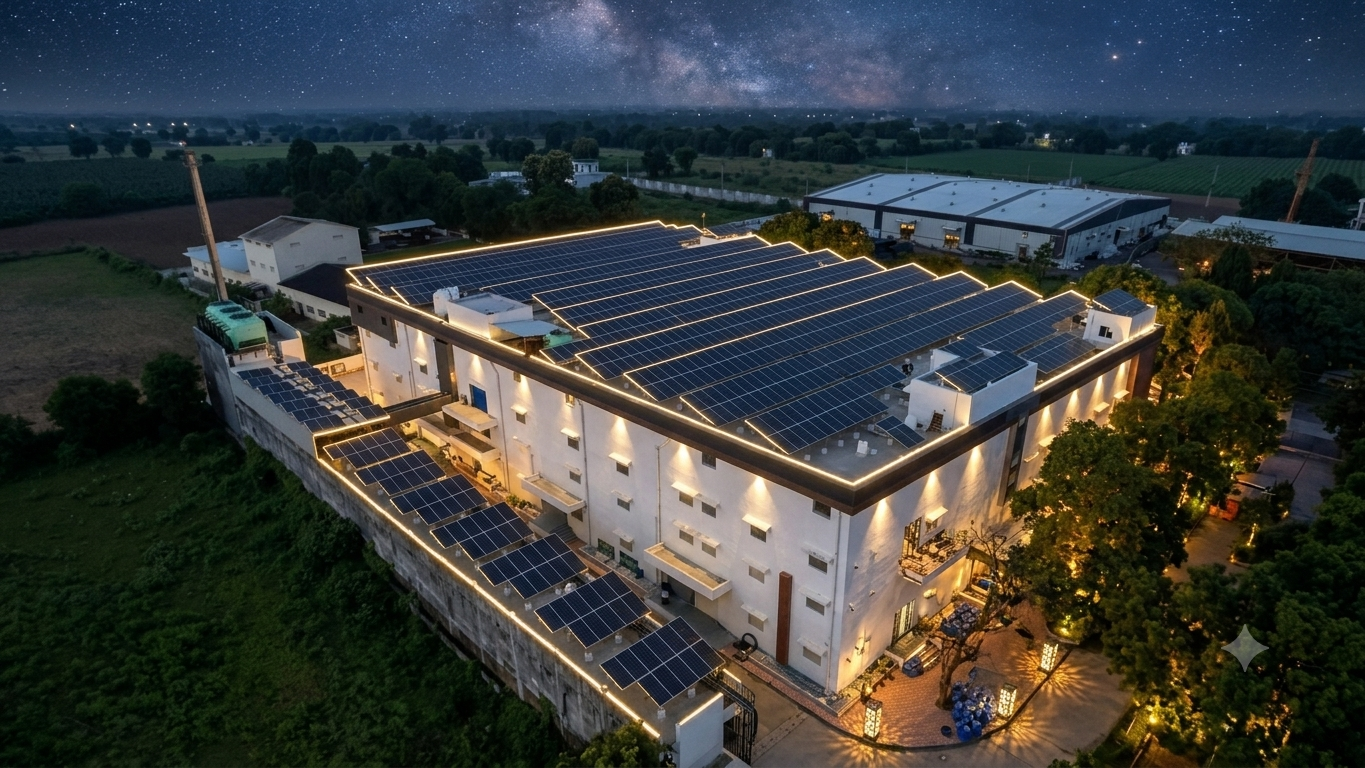
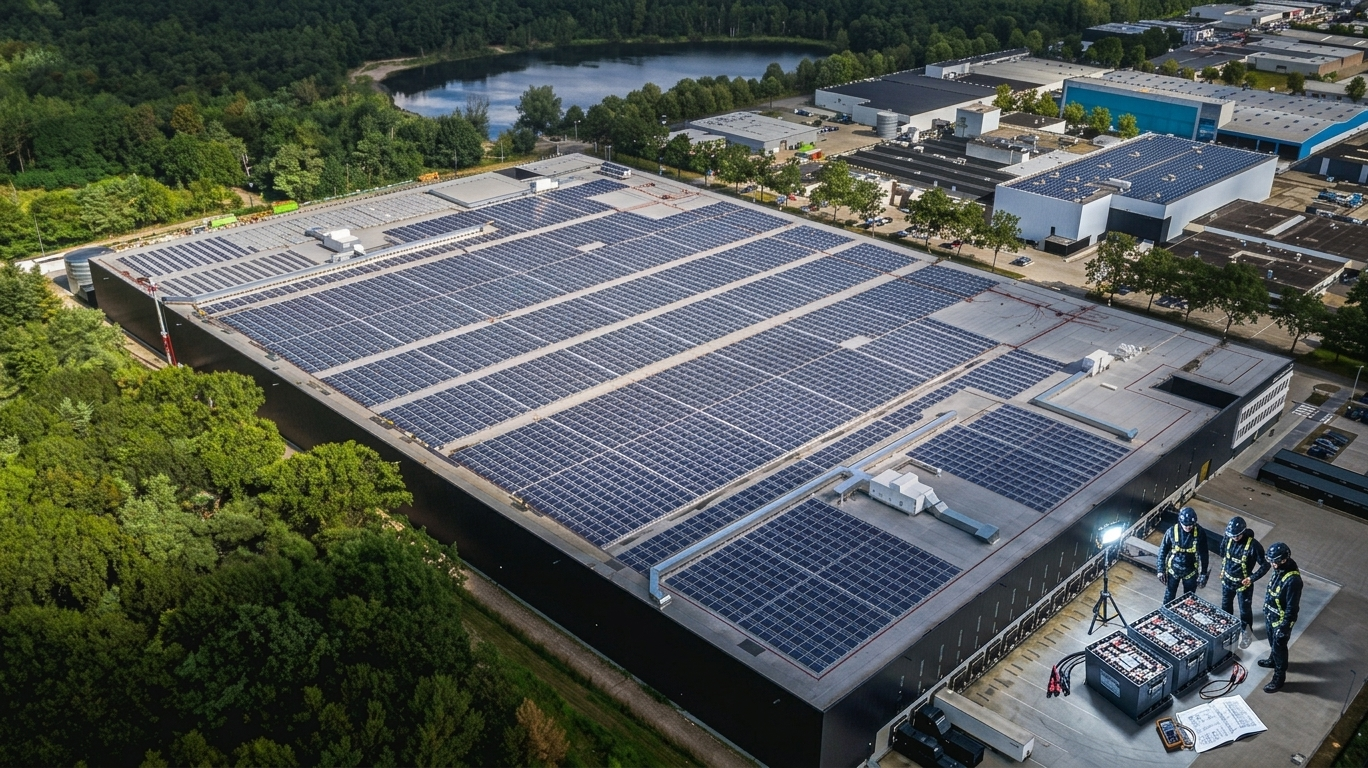
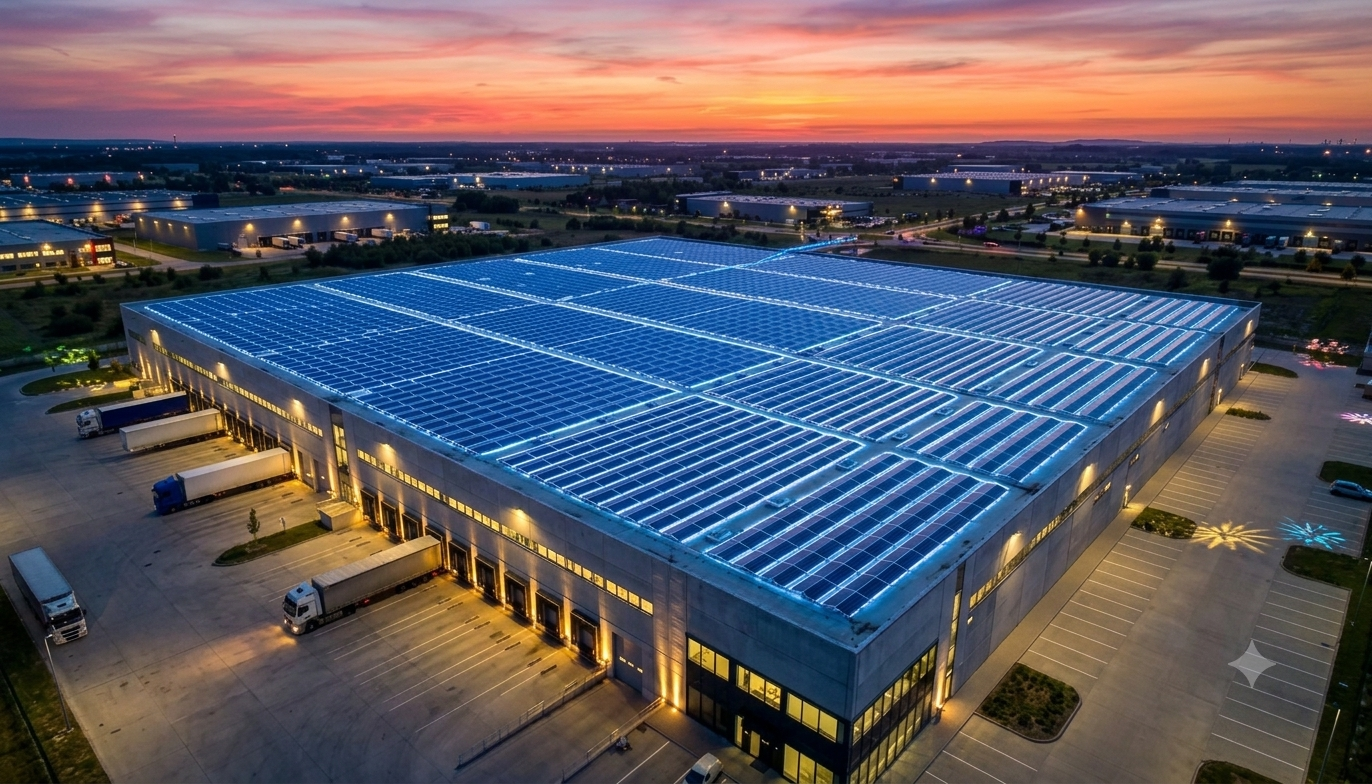
The Commercial Rooftop Solar Project focuses on designing, installing, and commissioning solar photovoltaic (PV) systems on commercial buildings such as offices, shopping complexes, hotels, hospitals, schools, warehouses, and industrial facilities. The system converts sunlight into electricity to meet a portion of the building's energy requirements.
Commercial solar installations are designed according to the property's electricity consumption, available rooftop area, operating hours, structural capacity, and electrical infrastructure. The project integrates solar modules, inverters, mounting structures, electrical protection equipment, and grid connectivity to provide an efficient and reliable renewable energy solution.
By utilizing unused rooftop space, businesses can reduce grid electricity consumption, manage operating expenses, and support their environmental sustainability goals.
2. Site Survey and Energy Assessment
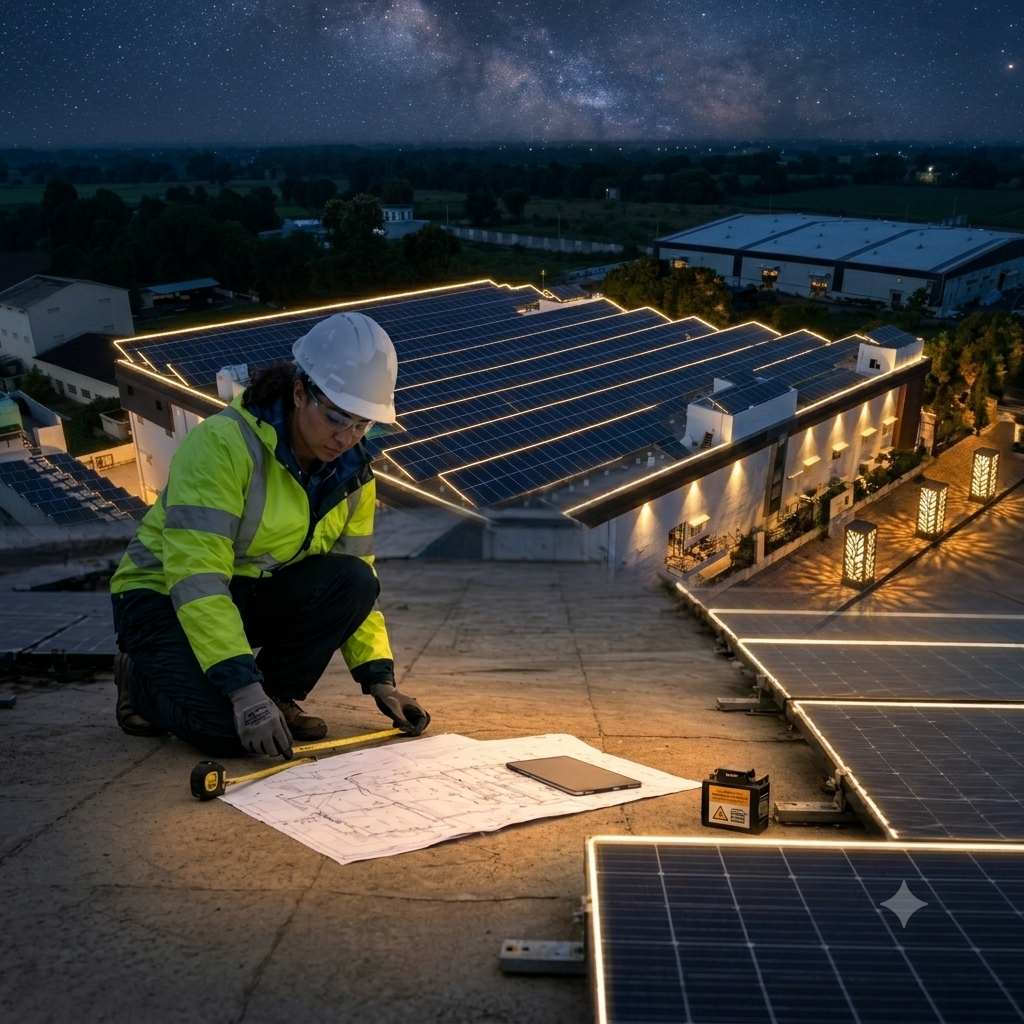
The project begins with a detailed site survey to assess the commercial building's rooftop area, structural strength, sunlight exposure, shading, and existing electrical infrastructure. The available roof space is evaluated to determine the practical installation area while maintaining safe access, drainage, and maintenance pathways.
The technical team reviews electricity bills, connected loads, demand patterns, operating hours, and seasonal energy consumption. For commercial properties, understanding daytime energy demand is particularly important because it helps determine how much solar electricity can be consumed directly by the building.
Based on these findings, the appropriate solar system capacity is estimated. A thorough assessment helps establish realistic generation expectations, identify installation constraints, and prepare a suitable design for the commercial property's energy requirements.
3. System Design and Engineering
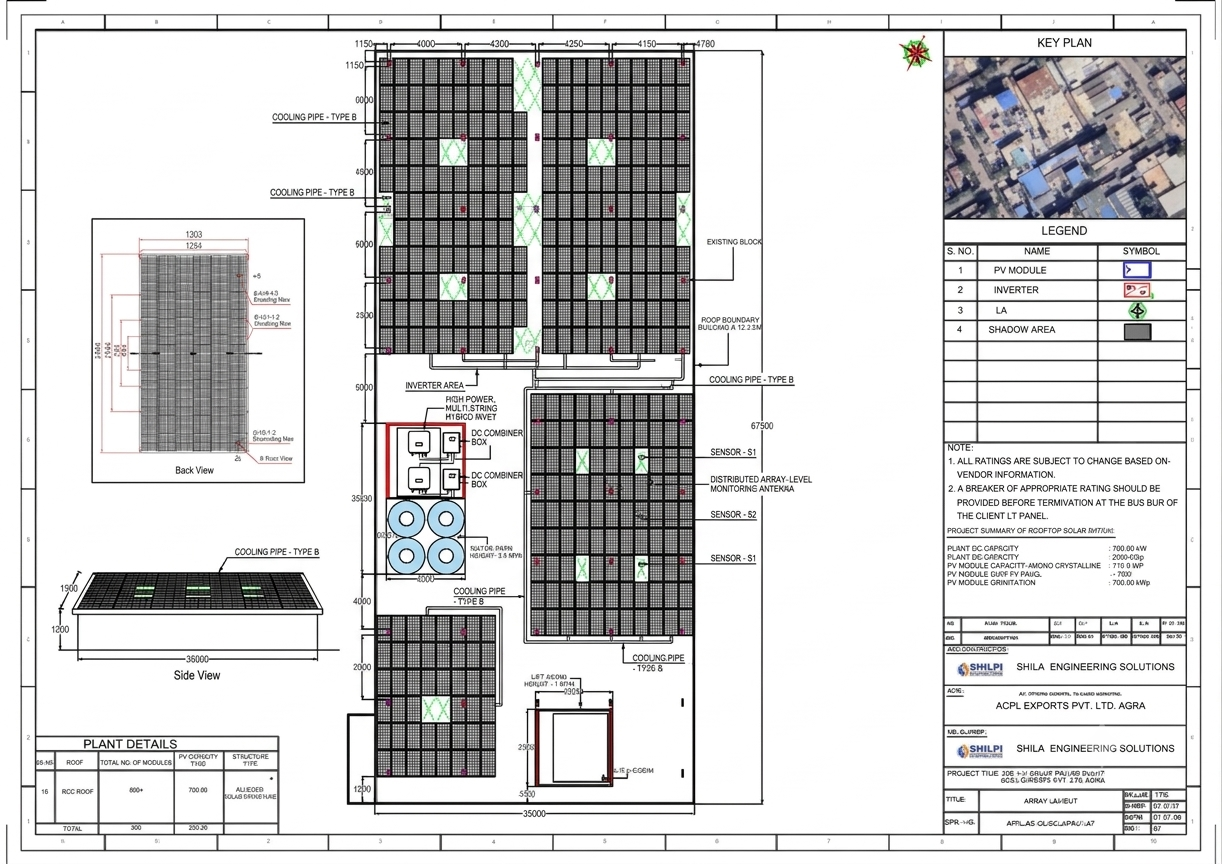
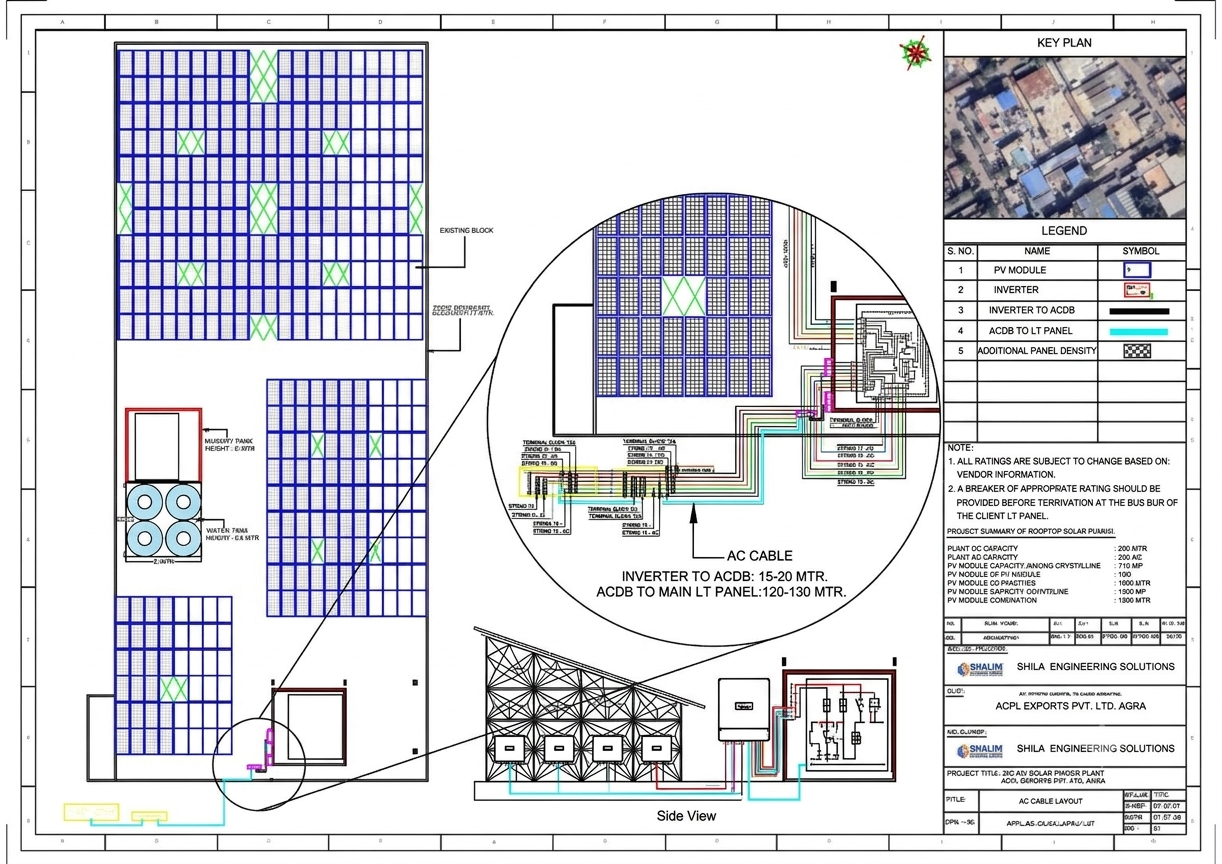
System design and engineering involve developing a technical plan for the commercial rooftop solar installation. The design includes solar module capacity, panel layout, inverter selection, mounting arrangements, cable routing, electrical protection, and grid interconnection requirements.
Engineers consider roof orientation, shading, wind loads, drainage, structural limitations, and the building's existing electrical system. Inverter capacity and electrical configurations are selected according to the solar array specifications and applicable utility requirements.
The design also considers expected energy generation, equipment accessibility, future maintenance, and efficient utilization of available rooftop space. A properly engineered system helps improve operational reliability, maintain electrical safety, and align the installation with the property's energy objectives.
4. Approvals and Documentation
Before installation, the required technical documents, site details, electrical drawings, and utility applications are prepared according to the project scope. Depending on the system capacity and applicable regulations, technical feasibility approval, grid connectivity permission, and other relevant clearances may be required from the local electricity distribution company (DISCOM).
The project documentation may include electricity consumer details, sanctioned load information, structural assessment, inverter specifications, protection arrangements, and single-line electrical diagrams. Additional approvals may be necessary depending on the building type, installation size, and local requirements.
Completing the applicable documentation before proceeding with major installation activities helps coordinate the project, reduce administrative delays, and support compliance with electrical and utility regulations.
5. Mounting Structure Installation
The mounting structure provides a secure foundation for the solar modules on the commercial rooftop. It is selected according to the roof type, structural capacity, module specifications, wind loads, and approved engineering design.
For industrial sheds and large commercial buildings, the structure may need to accommodate metal roofing, concrete roofs, or other roof configurations. The installation plan considers appropriate anchoring or approved attachment methods, corrosion resistance, waterproofing, roof drainage, and maintenance access.
The structure is aligned to provide suitable panel orientation and tilt while maintaining the required clearances. Proper installation helps protect the building, supports the solar modules securely, and contributes to the durability and long-term performance of the complete system.
6. Solar Panel Installation
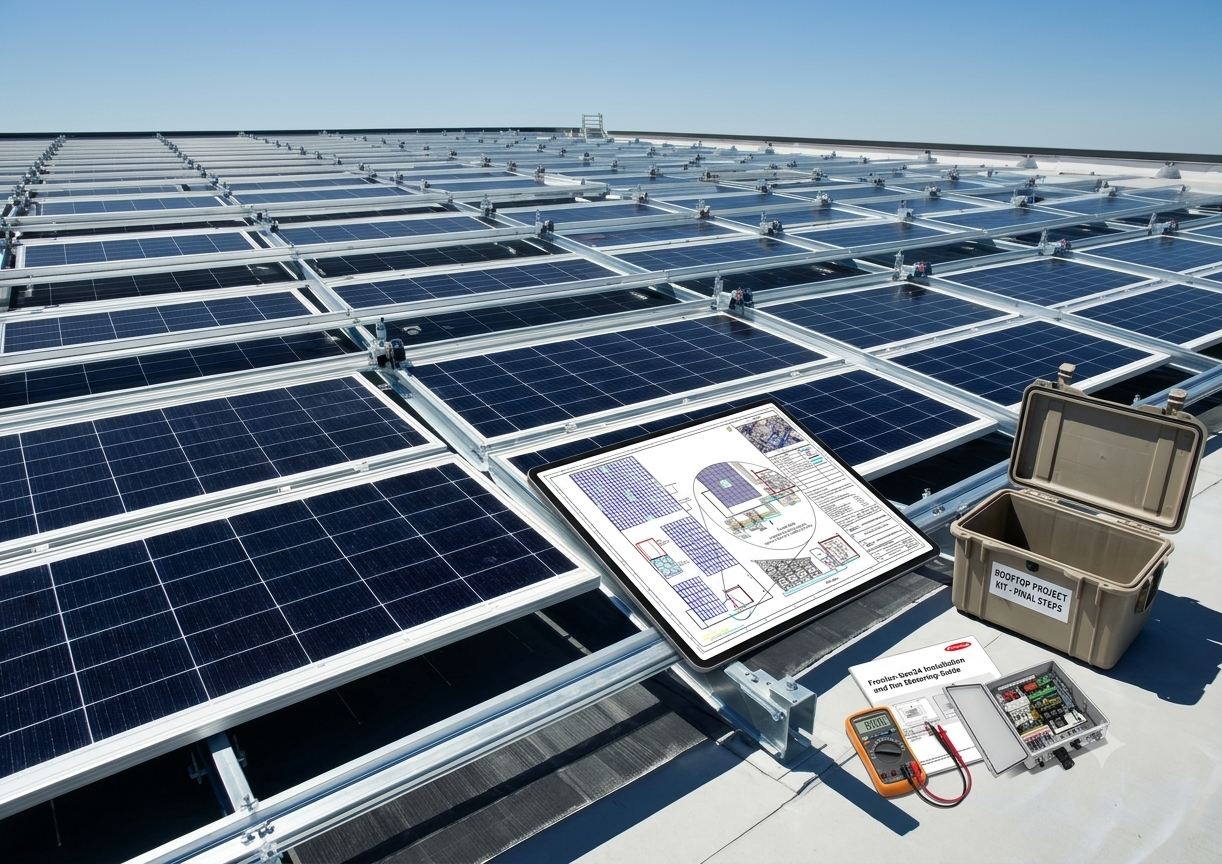
Solar panel installation involves placing and securing photovoltaic modules on the prepared mounting structure according to the approved layout. The modules are arranged to utilize the available rooftop area efficiently while minimizing shading and maintaining appropriate access for inspection and cleaning.
The panels are interconnected using compatible connectors and correctly rated DC cables to form the required solar strings and arrays. Electrical polarity, connector compatibility, cable routing, and mechanical fastening are checked during installation.
For large commercial projects, installation activities are coordinated in stages to maintain quality control and workplace safety. Proper module alignment, ventilation, and secure mounting help support efficient energy generation and dependable operation throughout the system's service life.
7. Inverter and Electrical Integration
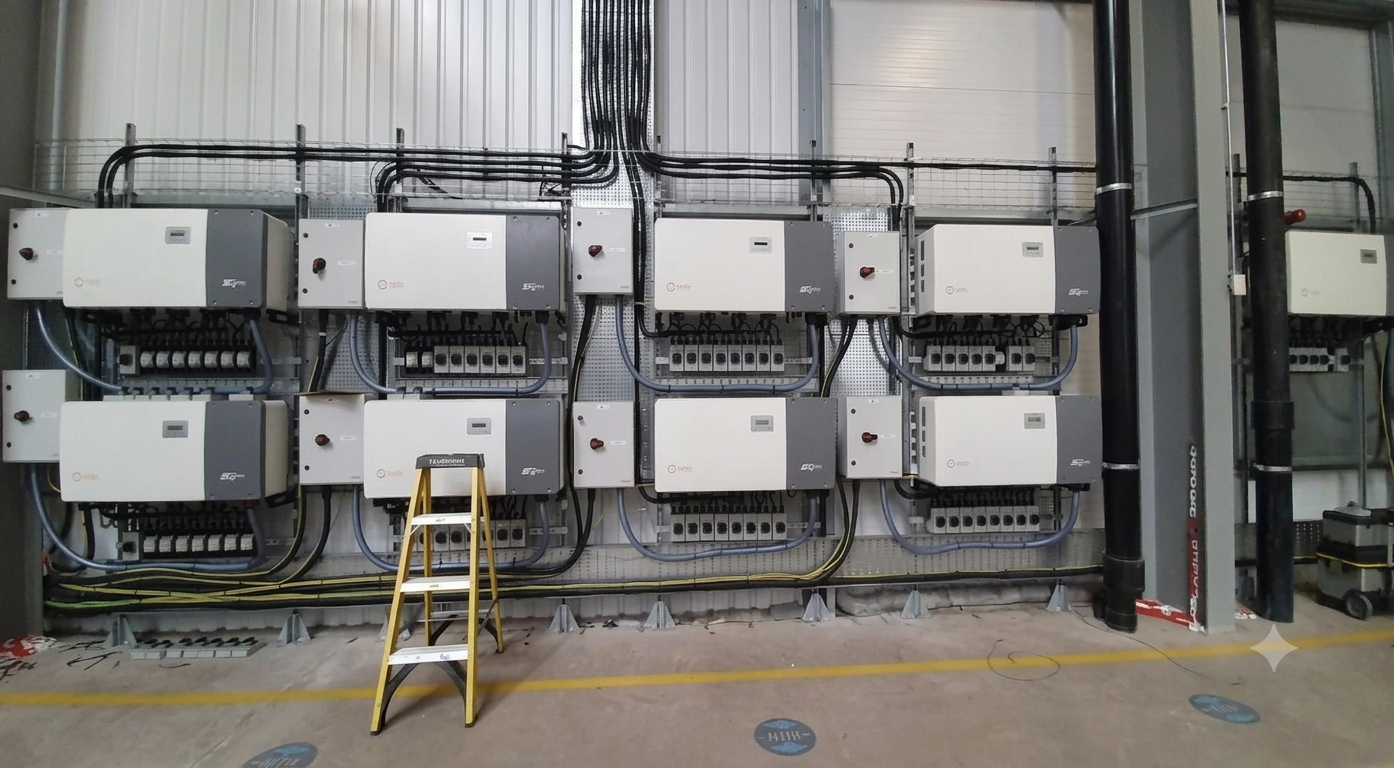
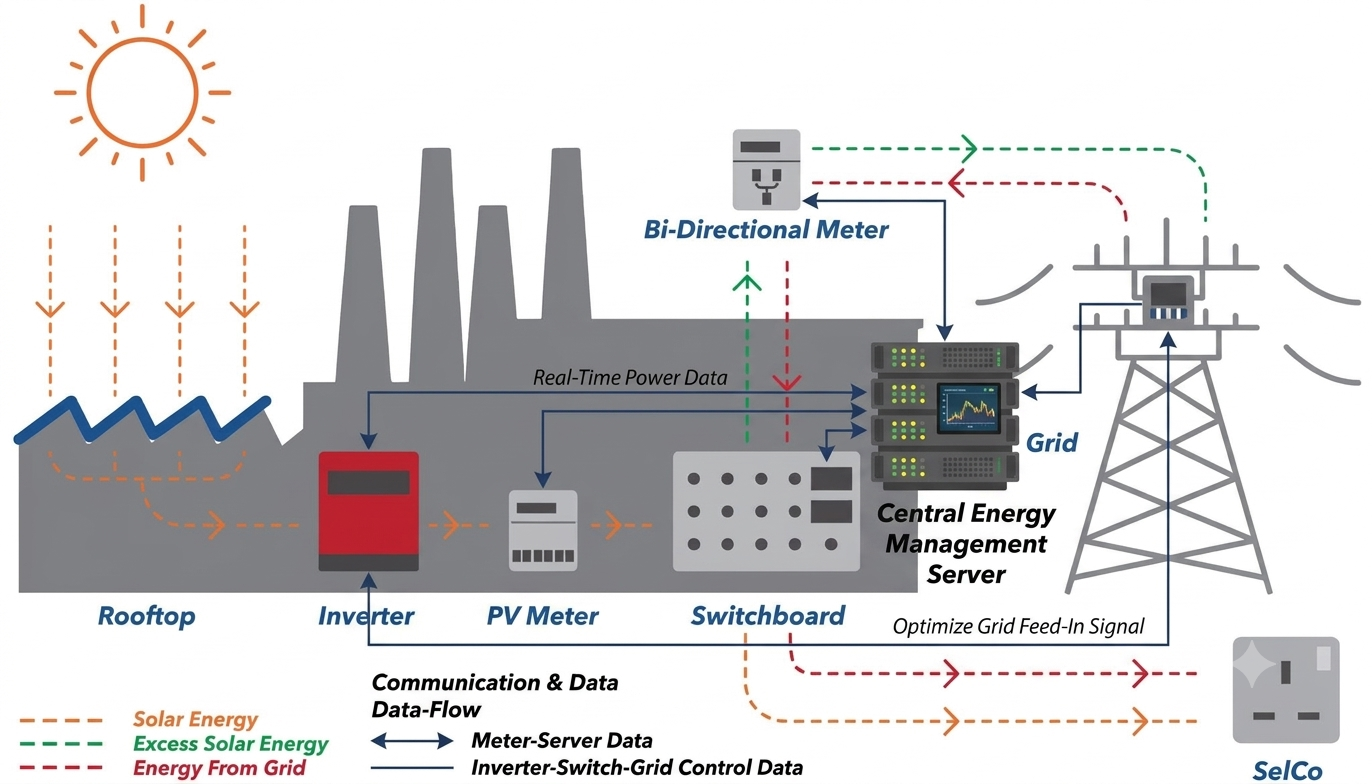
The inverter and electrical integration stage connects the solar array to the commercial building's electrical infrastructure. Solar modules generate direct current (DC) electricity, which is converted into alternating current (AC) by compatible inverters for use by the building's electrical loads.
Inverter selection is based on the solar array capacity, voltage and current characteristics, grid requirements, operating conditions, and manufacturer's specifications. The electrical design includes suitable DC and AC cables, isolation equipment, circuit protection, and connections to the designated distribution panel or point of interconnection.
For larger systems, electrical integration may involve multiple inverters and a coordinated connection to the building's electrical distribution network. Correct equipment sizing, cable selection, protection coordination, and qualified installation help ensure efficient energy conversion and reliable operation.
8. Earthing and Electrical Safety
Electrical safety is a critical part of every commercial rooftop solar project. The installation includes suitable earthing, bonding, isolation, and circuit protection arrangements according to the approved design and applicable standards.
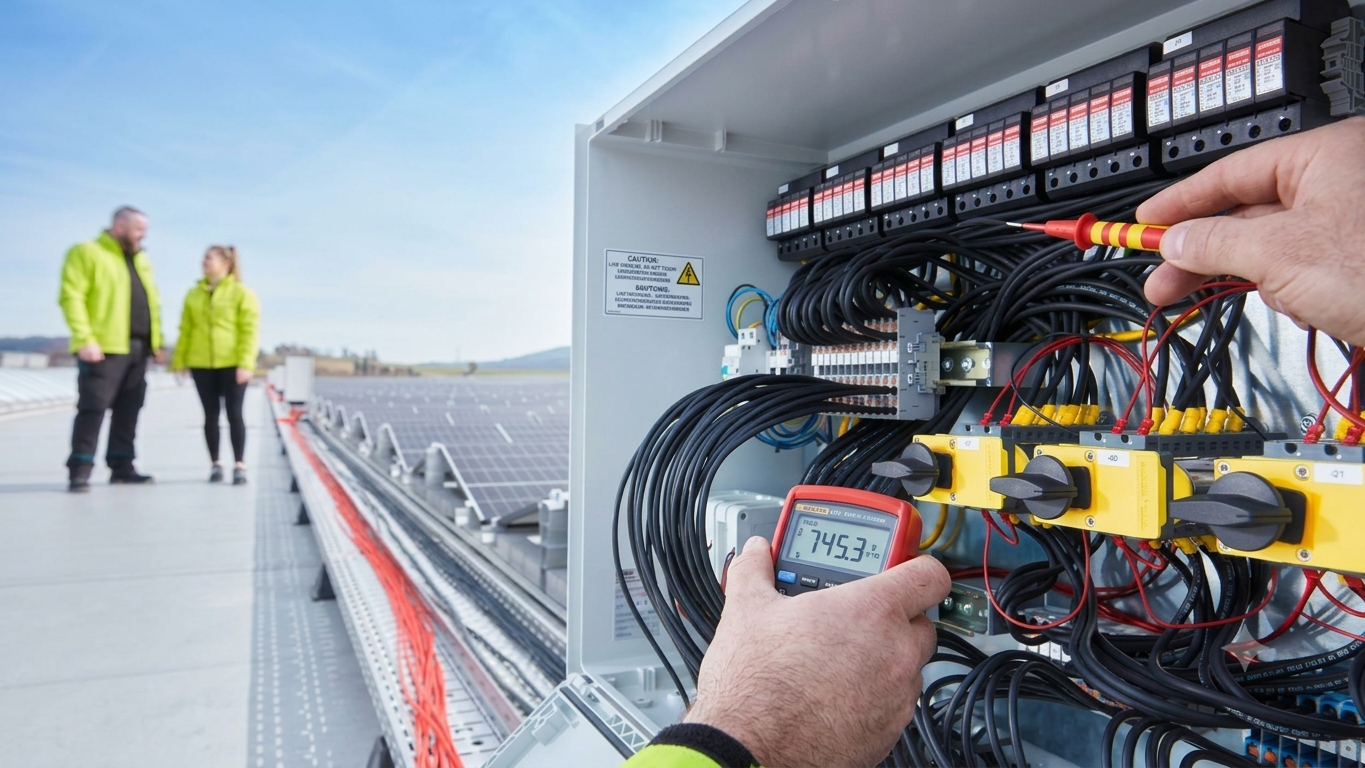
Protection equipment may include DC and AC isolators, circuit breakers, surge protection devices, and other protective components as required by the system configuration. Cable routes and electrical enclosures are selected to provide appropriate mechanical protection and environmental resistance.
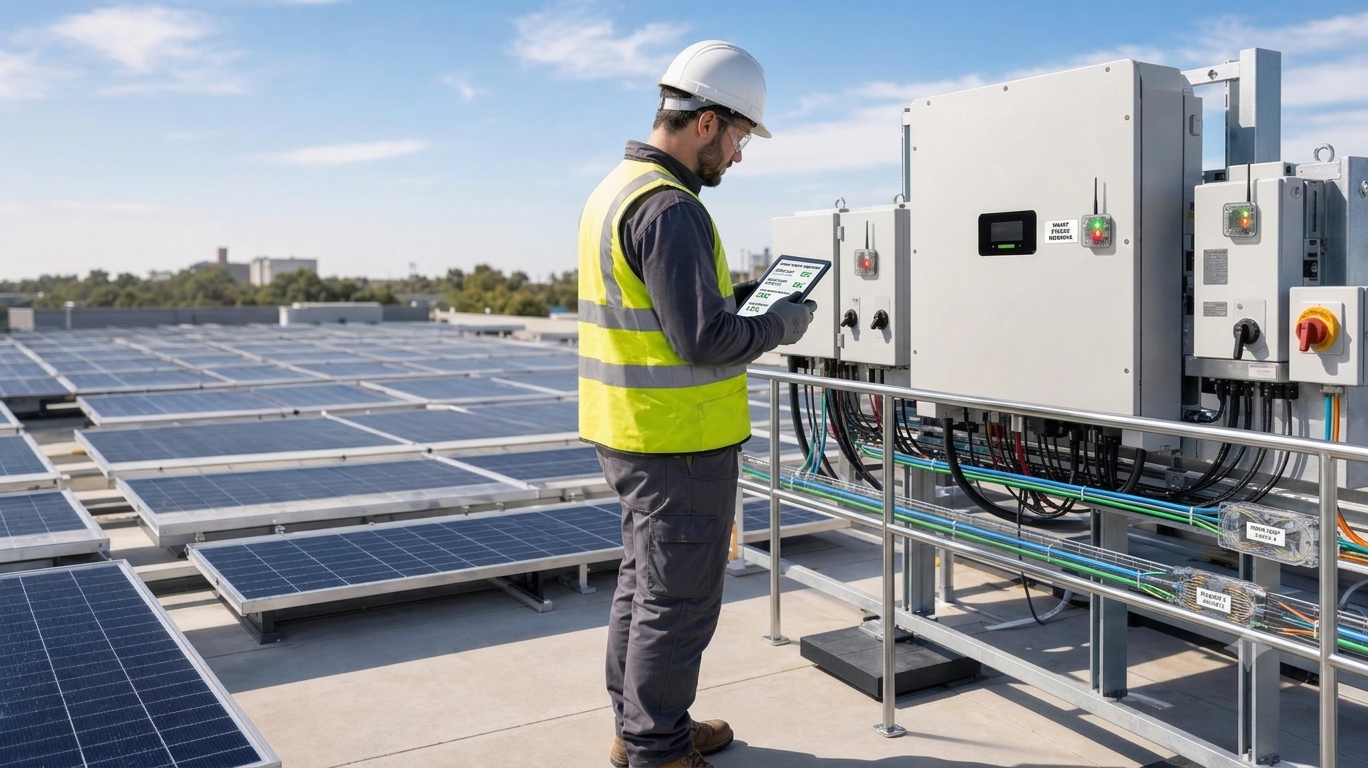
The project team also considers safe rooftop access, fall protection, fire access routes, equipment clearances, and safe working procedures during installation and maintenance. Qualified personnel inspect the electrical connections and protective arrangements before commissioning. These measures help protect employees, building occupants, equipment, and the electrical infrastructure.
9. Testing and Commissioning
Testing and commissioning verify that the installed solar system operates according to its approved design and equipment specifications. Before startup, the technical team inspects the solar modules, mounting hardware, cable connections, electrical protection devices, earthing, and inverter installation.
Electrical checks may include string polarity, open-circuit voltage, insulation resistance, protective-device operation, inverter settings, and communication systems. For grid-connected systems, synchronization, voltage and frequency parameters, and other required interconnection checks are completed according to applicable technical requirements.
Any identified defects are corrected before the system is placed into service. Commissioning is completed after the necessary safety checks, inspections, and applicable utility approvals. Proper testing helps establish a safe, reliable, and operationally ready commercial solar installation.
10. Net Metering and Grid Connection
Grid connection allows the commercial solar system to operate alongside the building's existing electricity supply. After the required technical checks and approvals, the system is connected to the designated electrical network in coordination with the DISCOM and according to the approved interconnection arrangement.
Where permitted, an approved bidirectional meter or other authorized metering arrangement records electricity imported from and exported to the grid. Solar electricity is generally used first by the building's operating loads, while surplus generation may be exported according to applicable utility rules.
The connection arrangement depends on system capacity, sanctioned load, voltage level, metering regulations, and the building's electrical infrastructure. Proper grid integration enables businesses to utilize solar generation while retaining access to grid electricity when solar output is insufficient.
11. Performance Monitoring
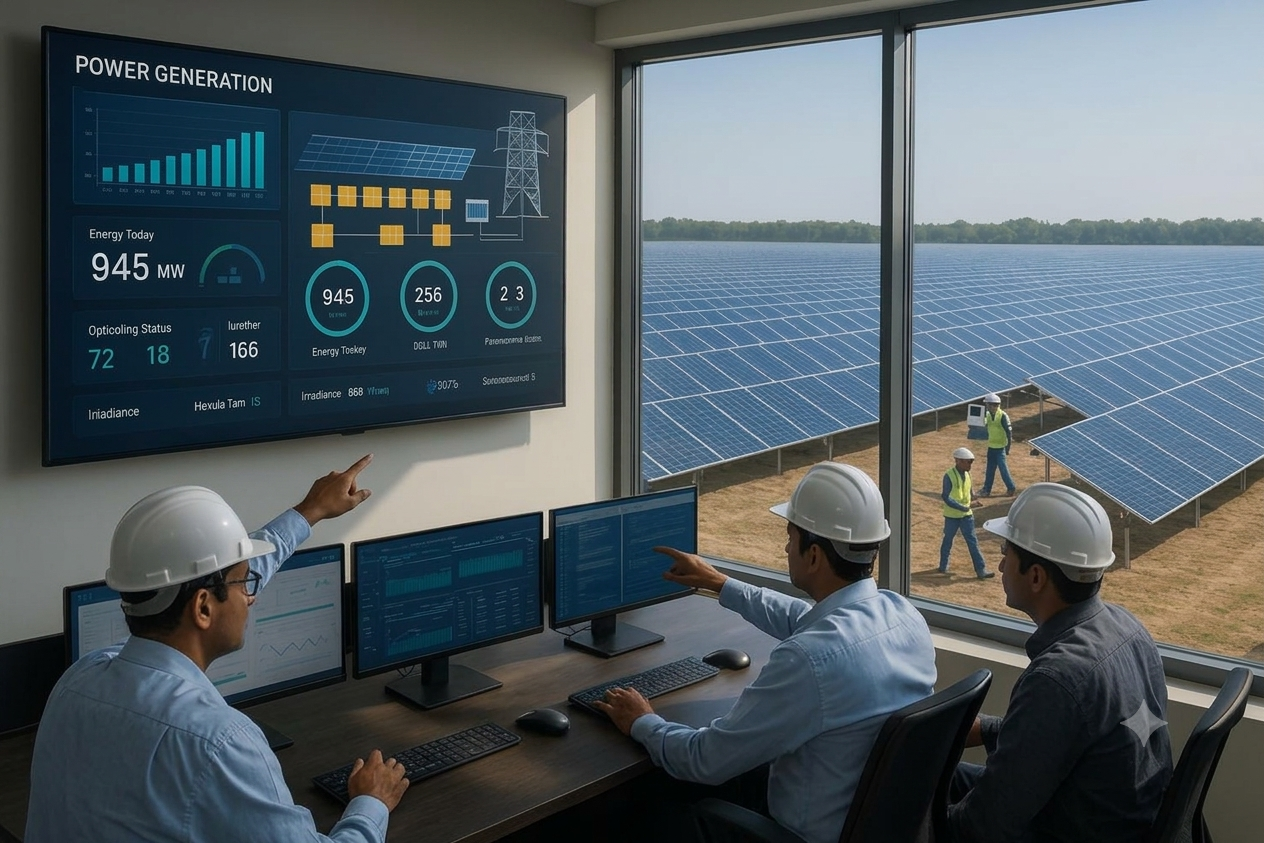
Performance monitoring helps commercial building owners track solar generation and evaluate system operation. Depending on the equipment installed, monitoring may provide real-time or periodic information about energy production, inverter status, system availability, and operational alerts.
For larger installations, monitoring platforms can display data from multiple inverters and identify unusual variations in generation. Comparing actual output with expected performance under prevailing sunlight and weather conditions helps identify potential issues such as shading, equipment faults, or communication failures.
Regular monitoring supports timely troubleshooting, informed maintenance planning, and better assessment of the system's contribution to the building's electricity requirements.
12. Operation and Maintenance
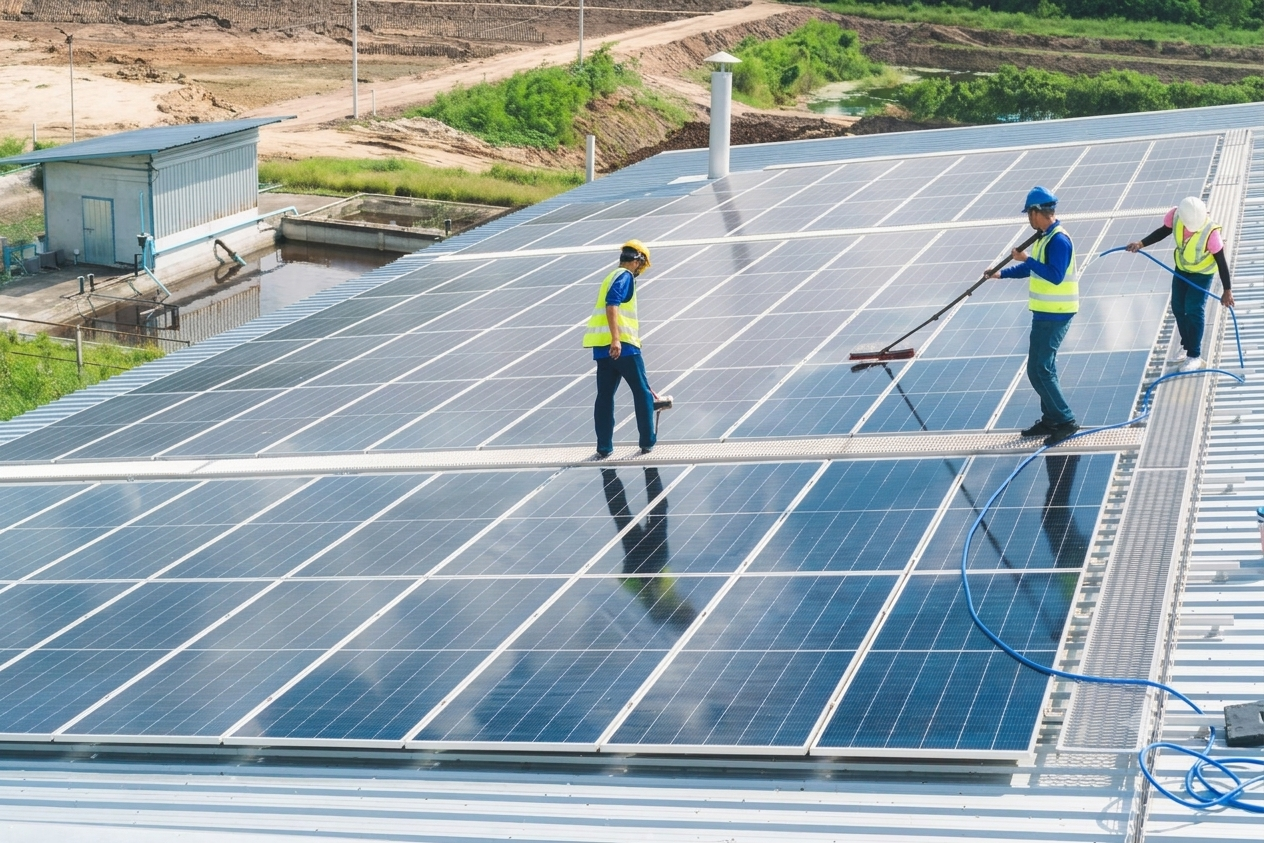
Operation and maintenance help preserve the performance, safety, and reliability of a commercial rooftop solar system throughout its service life. Maintenance activities are planned according to equipment manufacturer recommendations, site conditions, dust accumulation, and system operating requirements.
Routine activities may include panel cleaning, visual inspections, inverter checks, cable inspections, mounting hardware assessment, and verification of electrical protection equipment. Roof drainage, waterproofing, access routes, and safety equipment are also inspected where applicable.
Monitoring records and maintenance reports help identify recurring problems and plan corrective work. Electrical inspections and repairs are performed by qualified personnel using appropriate safety procedures. A structured maintenance program helps reduce avoidable downtime and maintain consistent energy generation.
13. How the Commercial Rooftop Solar System Works
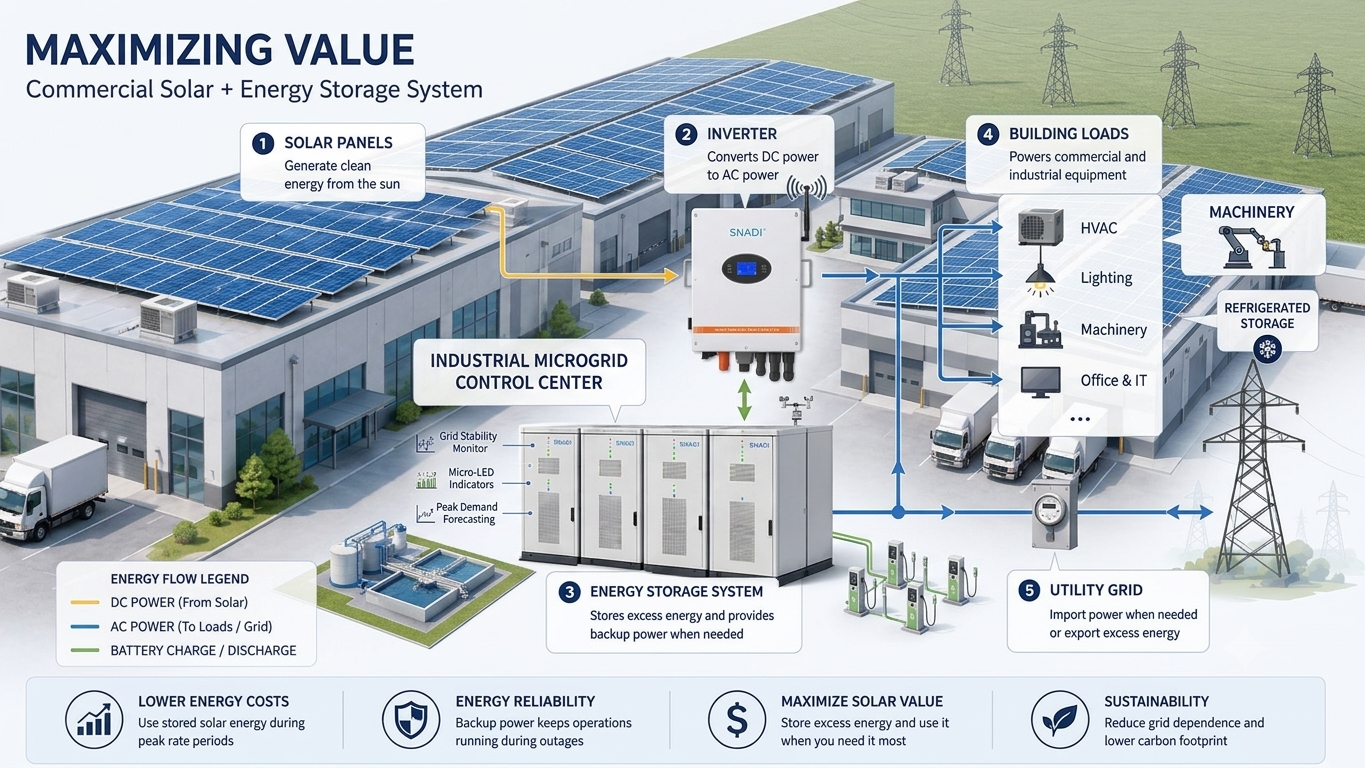
The commercial rooftop solar system captures sunlight through photovoltaic modules and converts it into direct current (DC) electricity. This electricity is supplied to solar inverters, which convert it into alternating current (AC) for use by the building's electrical equipment.
The generated electricity can supply lighting, computers, air-conditioning systems, machinery, pumps, and other compatible loads. When solar generation exceeds the building's immediate demand, surplus electricity may be exported to the grid if permitted under the approved metering and interconnection arrangement.
When solar generation is insufficient, the building draws electricity from the utility grid. A conventional grid-connected solar system generally does not provide backup during a grid outage unless it incorporates compatible backup equipment and an appropriate system design.
14. Major System Components
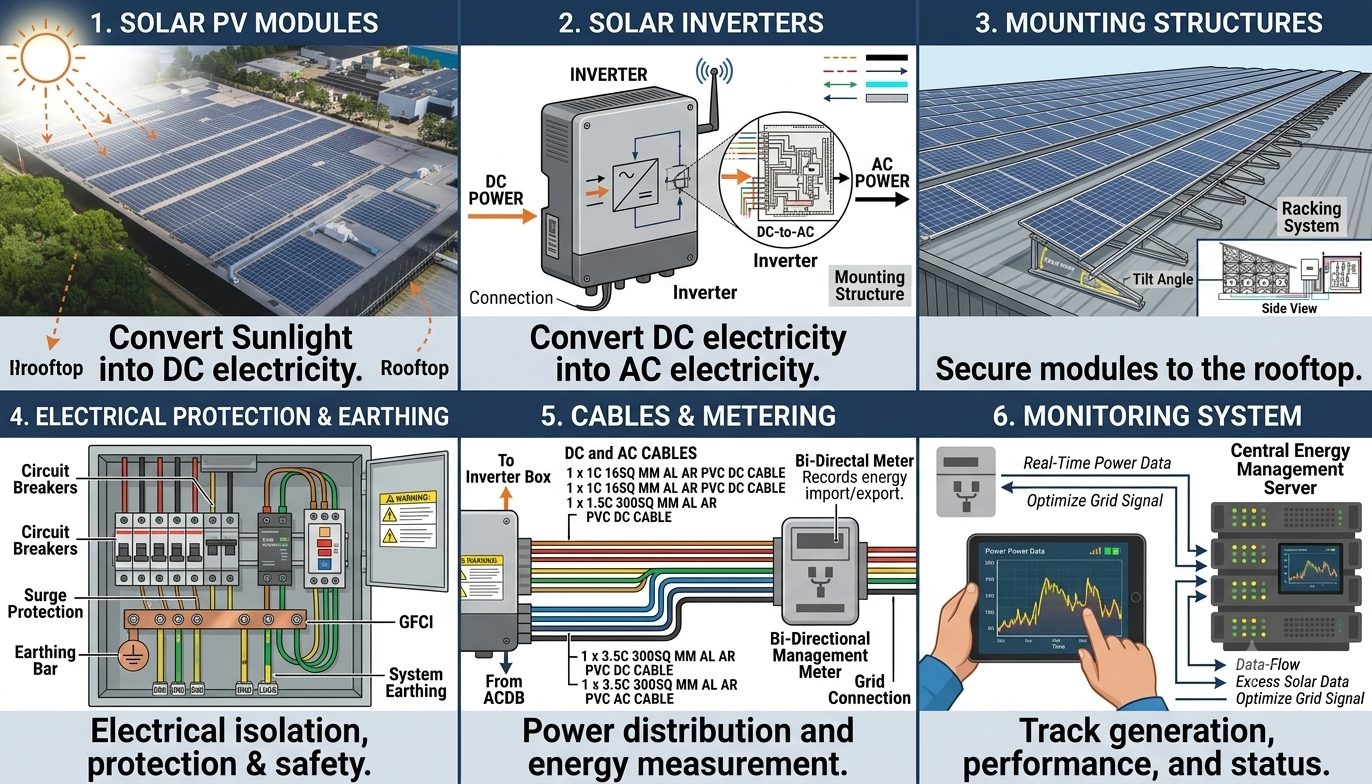
The major components of a commercial rooftop solar project include:
- Solar PV modules: Convert sunlight into DC electricity.
- Solar inverters: Convert DC electricity into AC electricity for commercial use.
- Mounting structures: Secure the modules to the rooftop.
- DC and AC cables: Carry electricity between system components and the building's electrical infrastructure.
- Electrical protection equipment: Provides appropriate isolation and circuit protection.
- Earthing and bonding system: Supports electrical safety.
- Metering equipment: Records electricity import and export where applicable.
- Monitoring system: Tracks generation, inverter status, and system performance.
Component selection depends on the project capacity, building requirements, electrical design, and applicable technical standards.
15. Key Benefits of a Commercial Rooftop Solar Project
- Reduced Electricity Expenses: Solar generation can reduce the amount of electricity purchased from the grid.
- Better Rooftop Utilization: Converts unused commercial rooftop space into an electricity-generating asset.
- Daytime Energy Support: Can offset daytime demand from offices, shops, warehouses, and industrial facilities.
- Long-Term Cost Management: Helps businesses manage a portion of their electricity expenditure over the system's operating life.
- Environmental Sustainability: Generates renewable electricity and can reduce emissions associated with conventional grid electricity.
- Scalable Design: System capacity can be planned according to energy demand, roof space, and electrical infrastructure.
- Improved Energy Planning: Monitoring data helps businesses understand generation patterns and energy utilization.
Actual savings and performance depend on system size, sunlight, load profile, electricity tariff, export compensation rules, equipment specifications, and maintenance.
16. Project Outcome
The completed Commercial Rooftop Solar Project demonstrates the practical application of solar photovoltaic technology in commercial buildings and industrial facilities. Through systematic site assessment, engineering design, installation, electrical safety measures, testing, and grid integration, the project establishes a renewable electricity generation system suited to the property's requirements.
A properly designed and maintained installation can reduce grid electricity consumption, improve the productive use of rooftop space, and support long-term energy cost management. Performance monitoring and planned maintenance help maintain system reliability and identify opportunities for operational improvement.
The final system capacity, electricity generation, and financial benefits depend on site conditions, installed equipment, electricity demand, tariffs, and applicable utility regulations.