
← All Projects
Residential rooftop solar
1. Site Survey and Energy Assessment
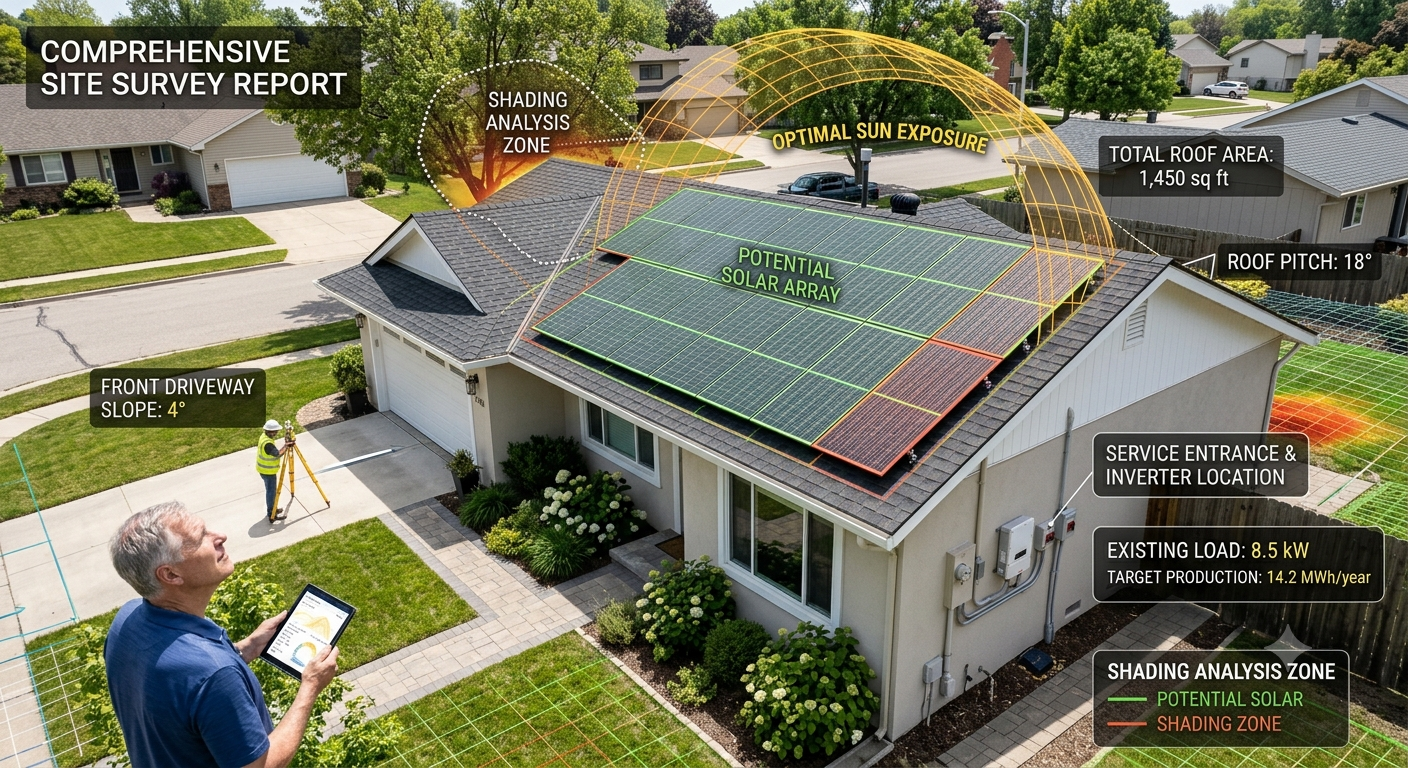
The site survey and energy assessment is the first and one of the most important stages of a residential rooftop solar project. In this step, the rooftop is carefully inspected to evaluate its available area, structural strength, direction, sunlight exposure, and shading from nearby buildings, trees, or other obstacles.
The existing electrical connections and household electricity consumption are also assessed by reviewing previous electricity bills. This information helps determine the appropriate solar system capacity according to the property's energy requirements and available rooftop space.
Based on the survey findings, the installation team identifies a suitable location for the solar panels, evaluates installation requirements, and considers necessary safety measures. A proper site assessment helps ensure efficient system design, optimal utilization of rooftop space, reliable electricity generation, and long-term solar system performance.
2. System Design and Engineering
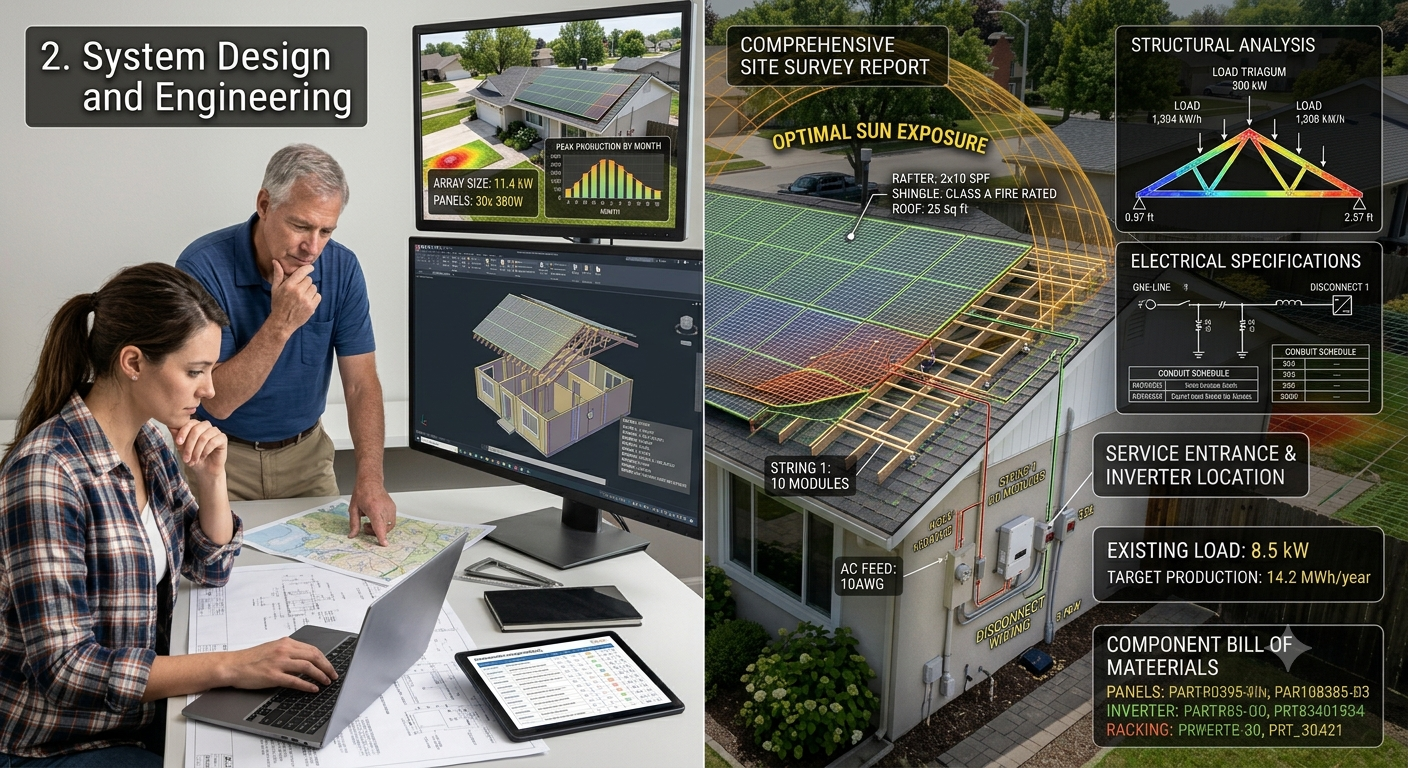
System design and engineering involve preparing a customized solar installation plan based on the findings of the site survey and energy assessment. The design team determines the appropriate solar panel capacity, number of modules, inverter specifications, panel orientation, mounting structure, cable routing, and electrical protection requirements.
The layout is planned to maximize sunlight exposure and utilize the available rooftop area efficiently while maintaining suitable spacing for ventilation, maintenance, and safe movement. Shading conditions, roof characteristics, wind loads, and electrical requirements are also considered during the design process.
A well-planned engineering design helps ensure compatibility between system components, efficient energy generation, safe electrical integration, and reliable long-term operation. It also provides a clear installation plan for the technical team.
3. Approvals and Documentation
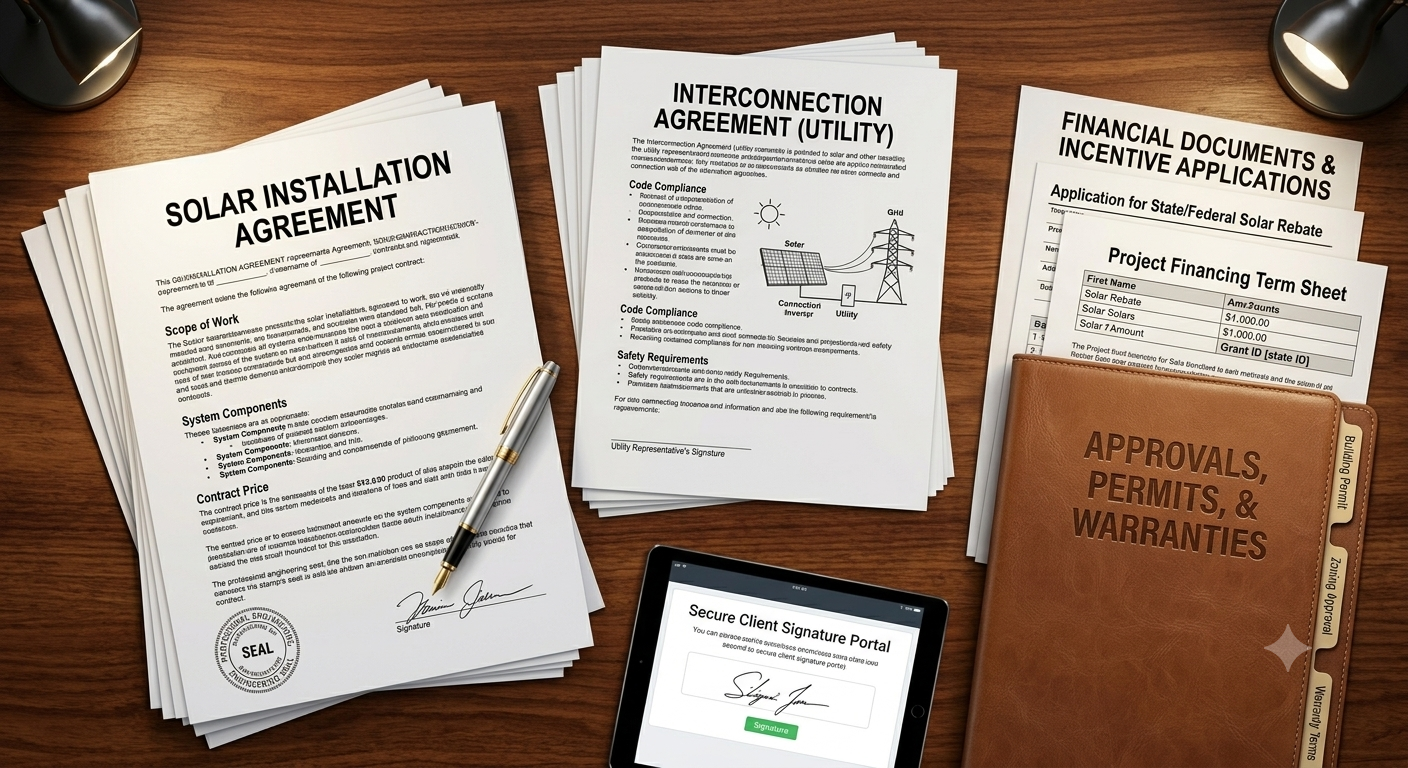
Approvals and documentation are essential for ensuring that the residential rooftop solar installation complies with applicable electricity regulations, technical requirements, and government scheme guidelines. This stage involves preparing the necessary application forms, property details, electricity consumer information, and technical documents.
Where required, the application is submitted to the local electricity distribution company (DISCOM) for technical feasibility assessment and grid connectivity approval. For eligible residential installations under government initiatives such as PM Surya Ghar: Muft Bijli Yojana, the required registration and documentation procedures are completed through the relevant official portal.
The installation team coordinates with the customer and concerned authorities to complete the applicable formalities. Proper documentation helps avoid unnecessary delays and supports the smooth progression of the installation, inspection, metering, and commissioning process.
4. Mounting Structure Installation
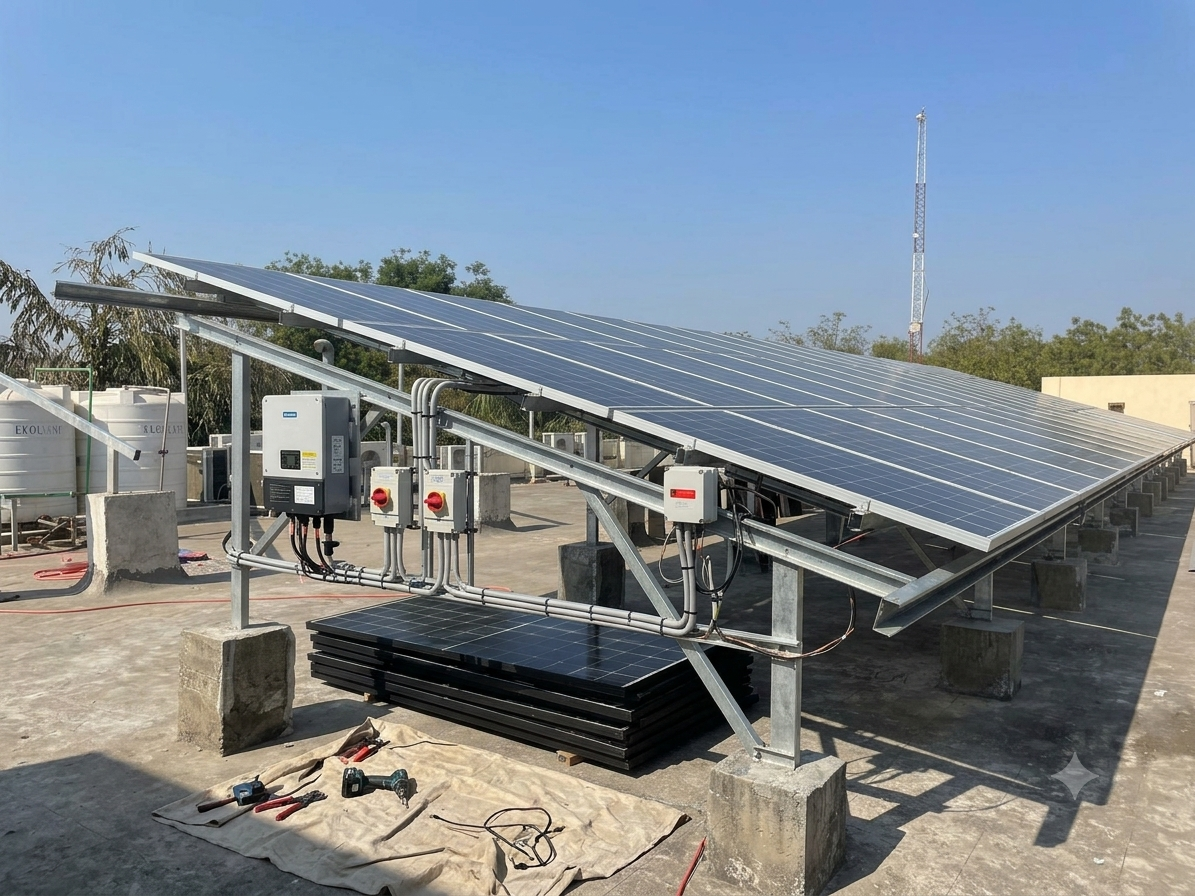
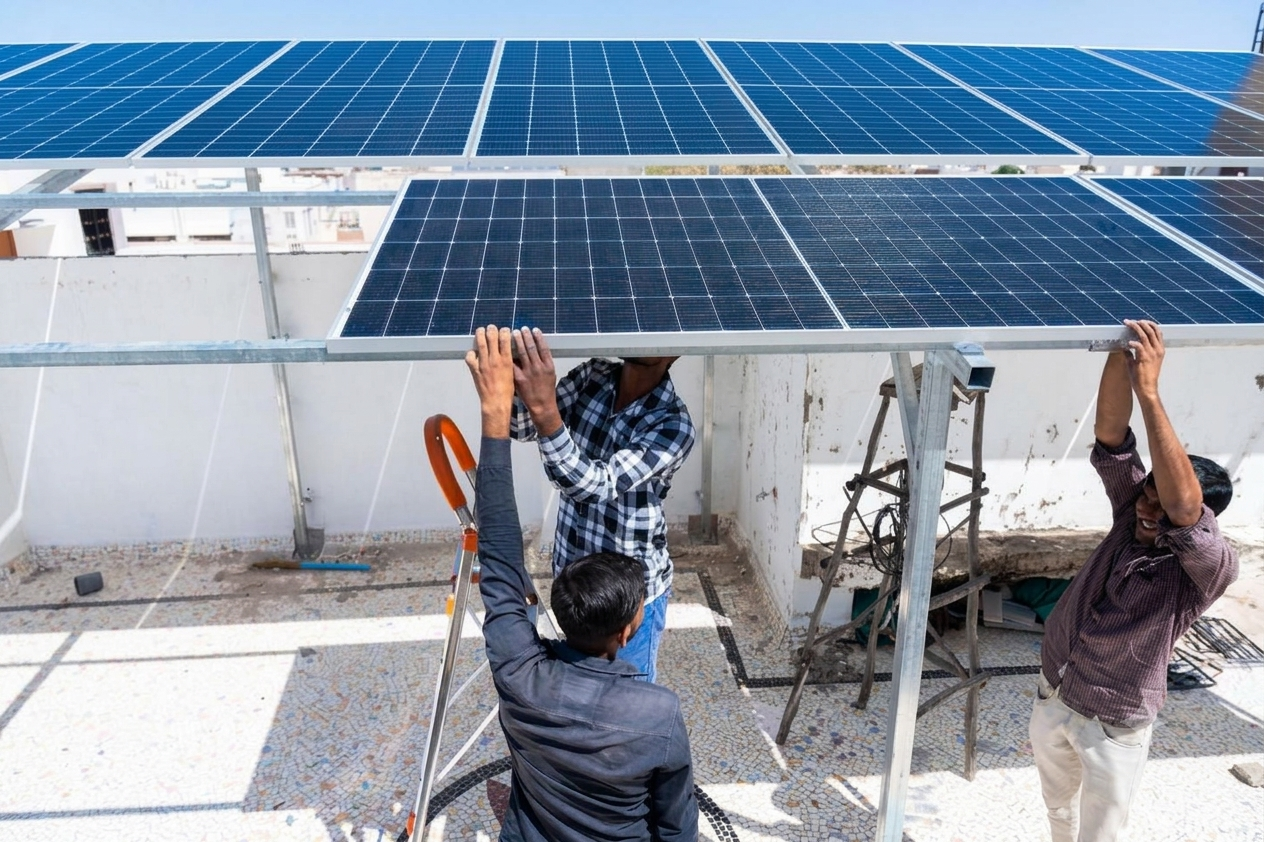
The mounting structure installation stage involves preparing and installing a suitable support framework for the solar panels on the residential rooftop. The structure is selected according to the roof type, available space, panel specifications, wind conditions, and overall system design.
The mounting framework is positioned and secured to provide adequate stability, appropriate panel orientation, and the required tilt angle for effective sunlight exposure. Proper anchoring, corrosion resistance, waterproofing, and drainage considerations are important to protect the rooftop and maintain structural reliability.
During installation, suitable spacing is maintained between panels to support ventilation, cleaning, inspection, and future maintenance. A properly installed mounting structure provides a stable foundation for the solar modules and contributes to the safety, durability, and long-term performance of the complete solar system.
5. Solar Panel Installation
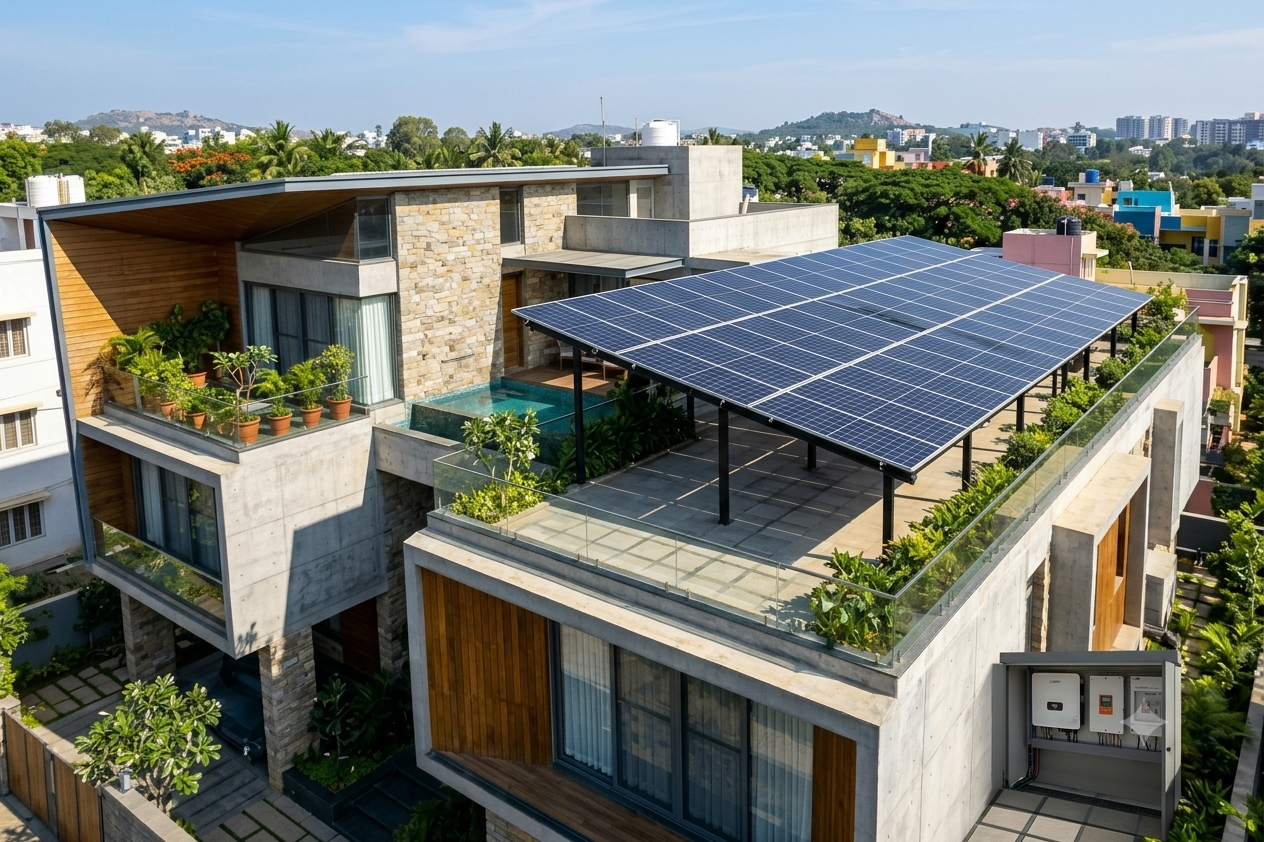
Solar panel installation involves mounting photovoltaic (PV) modules onto the prepared rooftop structure according to the approved system layout. The panels are positioned to receive adequate sunlight throughout the day, while unnecessary shading from nearby objects is minimized wherever possible.
Each solar module is securely fastened using compatible mounting clamps and hardware. The modules are electrically interconnected using suitable connectors and appropriately rated DC cables to form the required solar array. Correct polarity, connector compatibility, cable management, and secure electrical connections are carefully checked during installation.
Proper panel alignment and installation help maximize the effective use of rooftop space and support efficient electricity generation. The installation team also ensures that cables are protected from physical damage and environmental exposure, while adequate access is maintained for inspection and cleaning.
6. Inverter and Electrical Integration
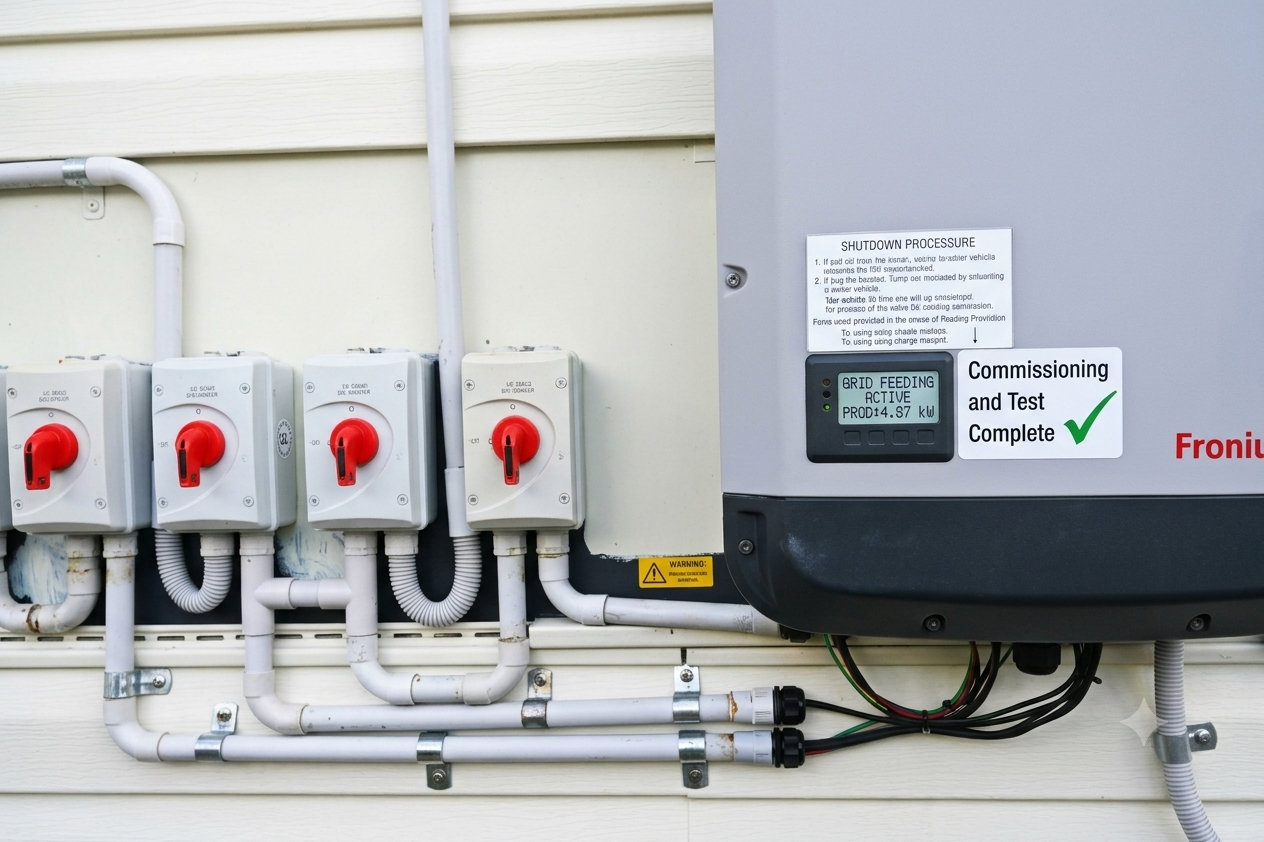
Inverter and electrical integration is the stage in which the solar panels are connected to the electrical system of the house through a compatible solar inverter. The photovoltaic modules generate direct current (DC) electricity, which is supplied to the inverter for conversion into alternating current (AC) electricity suitable for household appliances.
The inverter is selected according to the system capacity, electrical characteristics of the solar array, grid requirements, and manufacturer specifications. Appropriate DC and AC cables, isolation devices, circuit protection, and other required electrical accessories are installed to establish a safe and reliable connection.
The inverter's location is selected with consideration for ventilation, accessibility, environmental protection, and manufacturer recommendations. All electrical connections are checked by qualified personnel to verify correct installation and component compatibility. Proper electrical integration helps ensure efficient energy conversion and reliable operation of the residential rooftop solar system.
7. Earthing and Electrical Safety
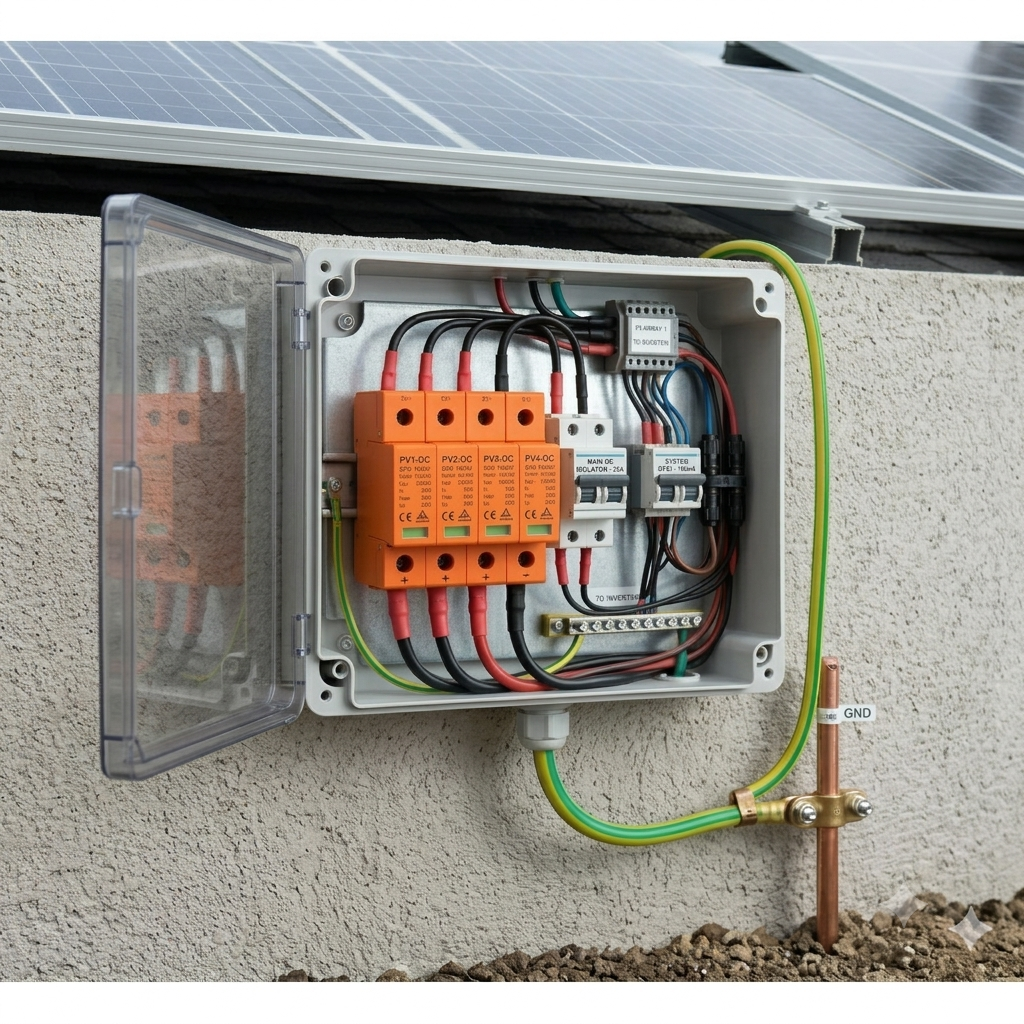
Earthing and electrical safety are critical parts of a residential rooftop solar installation. Appropriate earthing, bonding, isolation, and circuit protection measures are implemented to reduce electrical hazards and support the safe operation of the entire system.
The installation includes suitable protective devices according to the system design and applicable standards. These may include DC and AC isolators, circuit breakers, and surge protection devices where required. Electrical cables and connectors are checked to ensure that they are properly rated, securely connected, and adequately protected against environmental exposure and physical damage.
Qualified personnel inspect the electrical connections, protective equipment, and earthing arrangements before commissioning. Proper implementation of electrical safety measures helps protect people, property, and equipment while supporting dependable system operation throughout its service life.
8. Testing and Commissioning
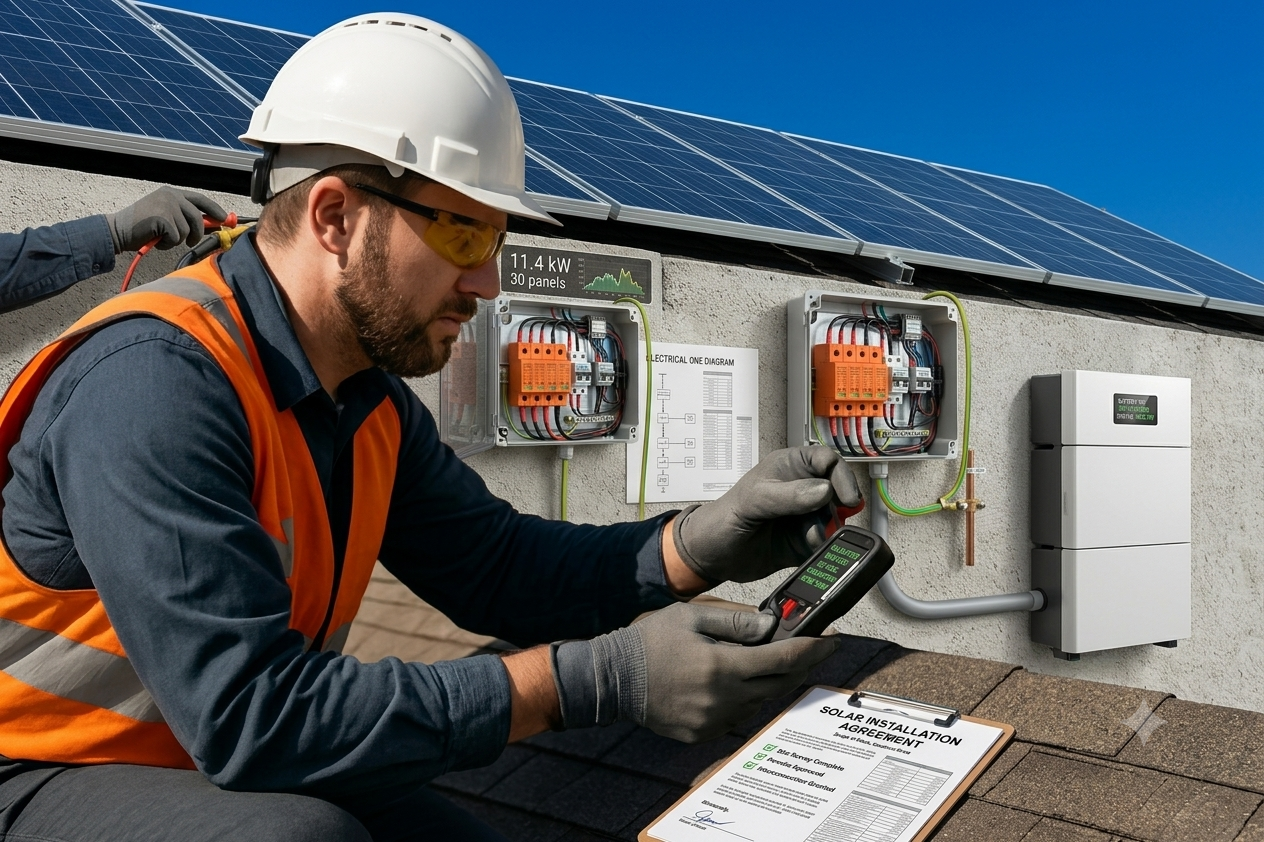
Testing and commissioning are performed after the installation of the solar panels, inverter, mounting structure, and electrical protection equipment. The purpose of this stage is to verify that all components have been installed correctly and that the complete system operates according to its design specifications.
The technical team checks panel connections, electrical polarity, string voltage, insulation, cable routing, earthing, protective devices, and inverter settings. For grid-connected installations, grid synchronization and other applicable operational checks are also performed according to the manufacturer's instructions and relevant technical requirements.
Any issues identified during testing are corrected before the system is placed into service. Commissioning is completed after the required safety checks and applicable utility approvals have been fulfilled. This process helps establish reliable operation, improve system safety, and confirm readiness for electricity generation.
9. Net Metering and Grid Connection
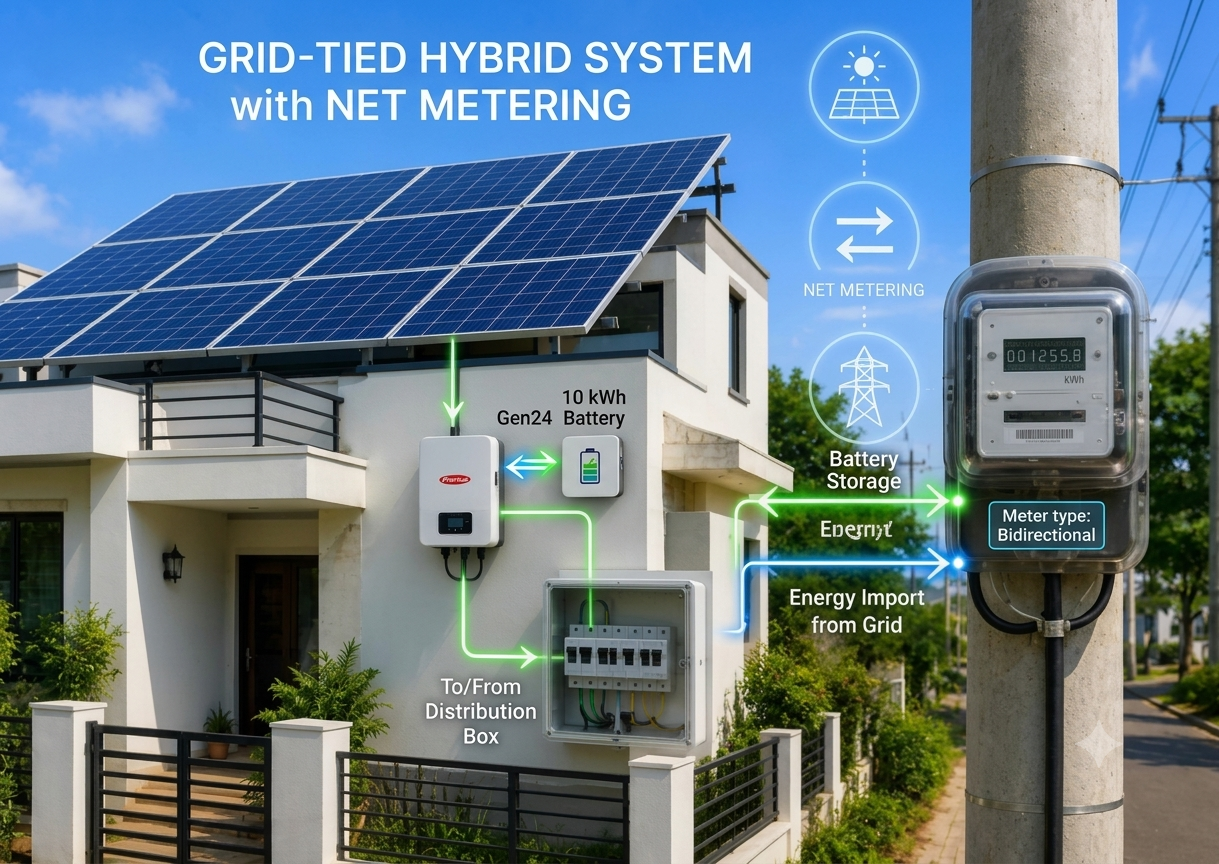
Net metering and grid connection allow an eligible residential rooftop solar system to operate in coordination with the local electricity distribution network. After the necessary installation checks and approvals, the applicable bidirectional meter or other authorized metering arrangement is completed in coordination with the DISCOM.
During daylight hours, solar electricity is first used to meet the household's electricity demand. When generation exceeds consumption, surplus electricity may be exported to the grid according to the approved metering arrangement and applicable regulations. When solar generation is insufficient, electricity can be imported from the grid to meet household requirements.
The metering arrangement records electricity import and export as applicable, allowing billing to be calculated according to the relevant utility rules. Proper grid integration helps households utilize solar energy effectively while maintaining access to conventional electricity when required.
10. Performance Monitoring
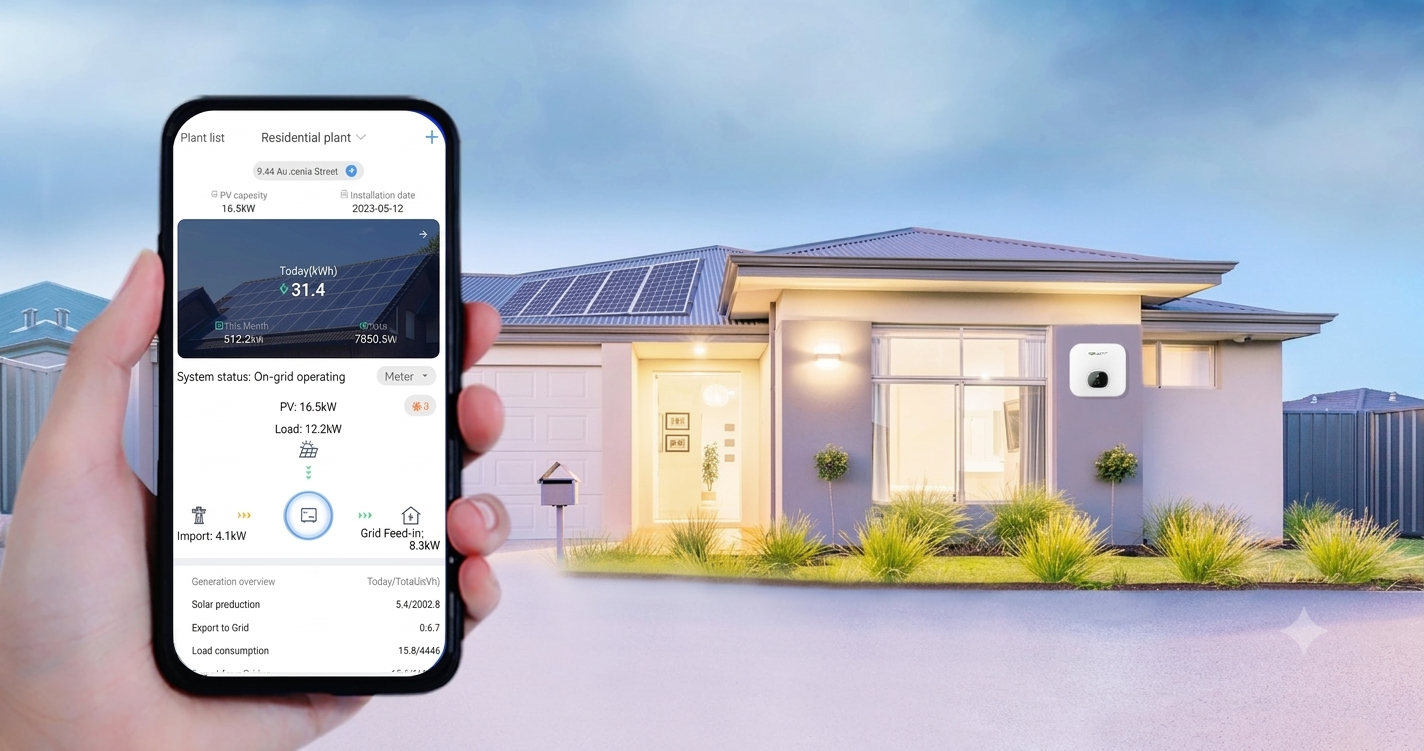
Performance monitoring helps track the electricity generation and operating condition of a residential rooftop solar system after commissioning. Depending on the installed equipment, monitoring may be available through the inverter display, a dedicated monitoring device, or a mobile application.
The system can provide information such as daily energy generation, cumulative electricity production, inverter status, and operating alerts. By reviewing this information, homeowners and service personnel can identify unusual reductions in generation, communication issues, or equipment warnings that may require further investigation.
Regular monitoring also helps evaluate the system's performance under changing weather and seasonal conditions. When an unexpected issue is detected, timely inspection and troubleshooting can help minimize downtime and maintain efficient operation. Monitoring supports better system management and helps homeowners understand the contribution of solar energy to their electricity needs.
11. Operation and Maintenance
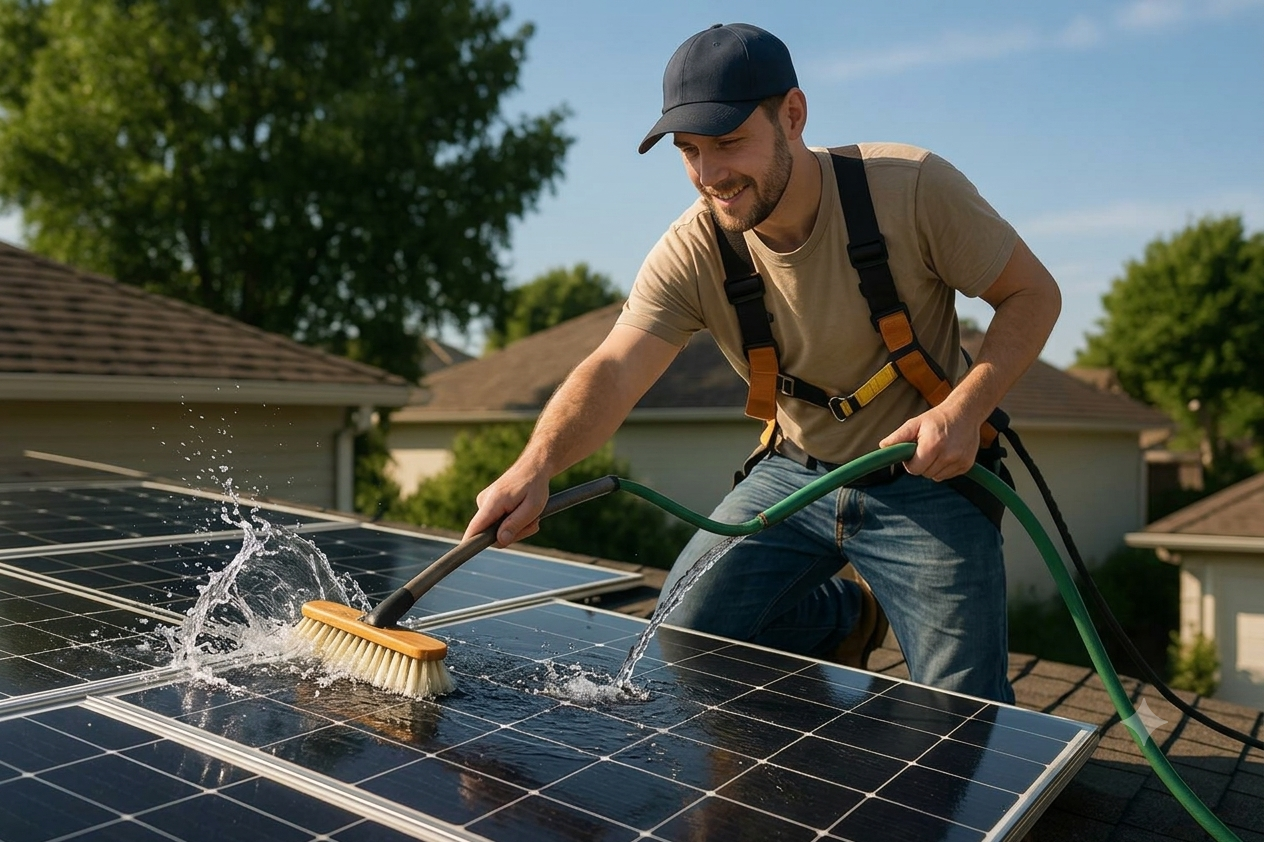
Operation and maintenance are necessary to preserve the safety, reliability, and performance of a residential rooftop solar system throughout its service life. Although solar systems generally require limited routine maintenance, periodic inspection helps identify dust accumulation, loose mounting hardware, cable damage, and other issues that may affect performance.
Solar panels are cleaned when required, depending on local dust levels, rainfall, and manufacturer recommendations. The inverter, electrical connections, mounting structure, protective devices, and visible cables should also be inspected periodically by qualified personnel. Any repairs or electrical work should follow the manufacturer's instructions and applicable safety procedures.
Maintenance records and monitoring data can help identify recurring problems and support timely corrective action. A planned maintenance approach helps preserve equipment condition, reduce avoidable interruptions, and maintain consistent electricity generation over the long term.
12. How the Solar System Works
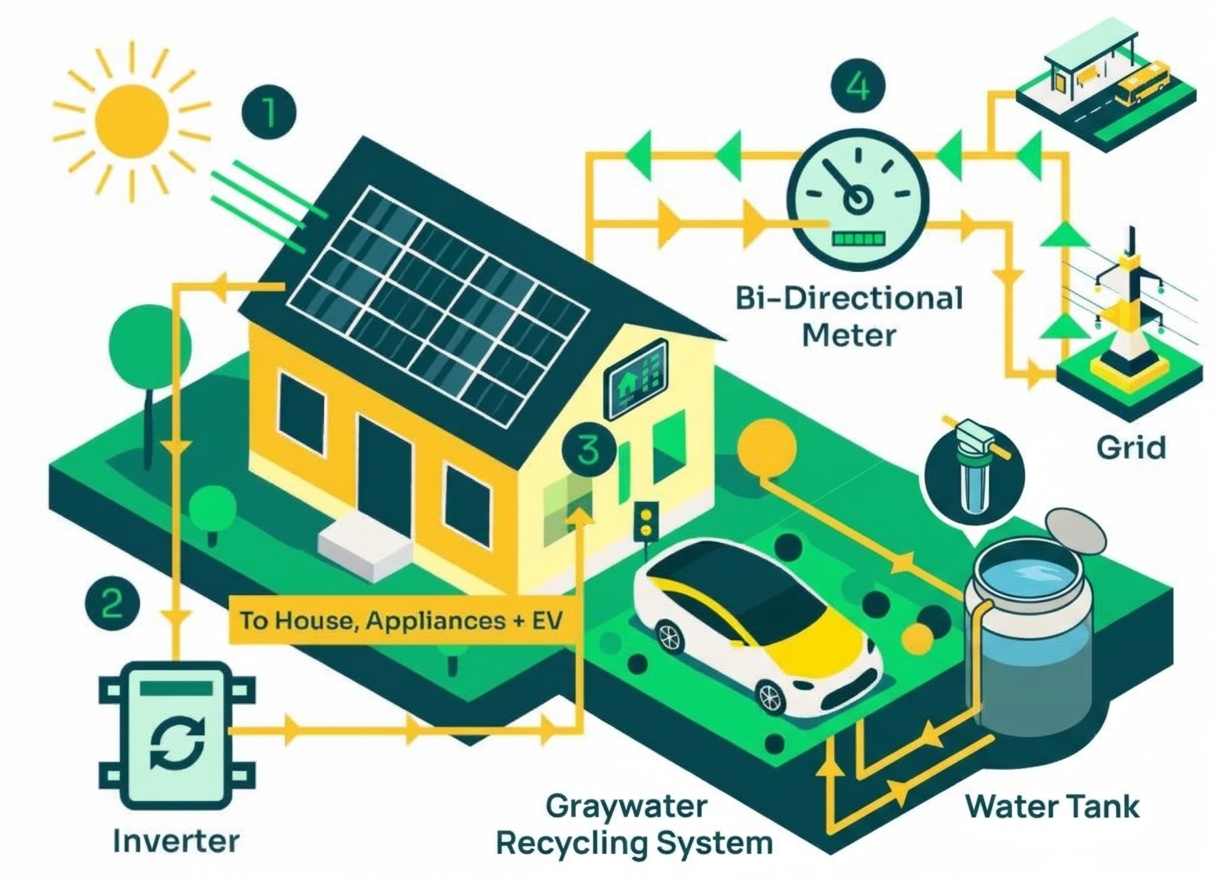
Solar panels absorb sunlight and generate DC electricity through the photovoltaic effect. The inverter converts this electricity into AC power, which supplies household appliances through the electrical distribution board.
When solar generation exceeds household demand, surplus electricity may be exported to the grid under the approved metering arrangement. When solar generation is insufficient, electricity is drawn from the grid. A conventional on-grid system generally does not provide backup during a grid outage unless compatible backup equipment is installed.
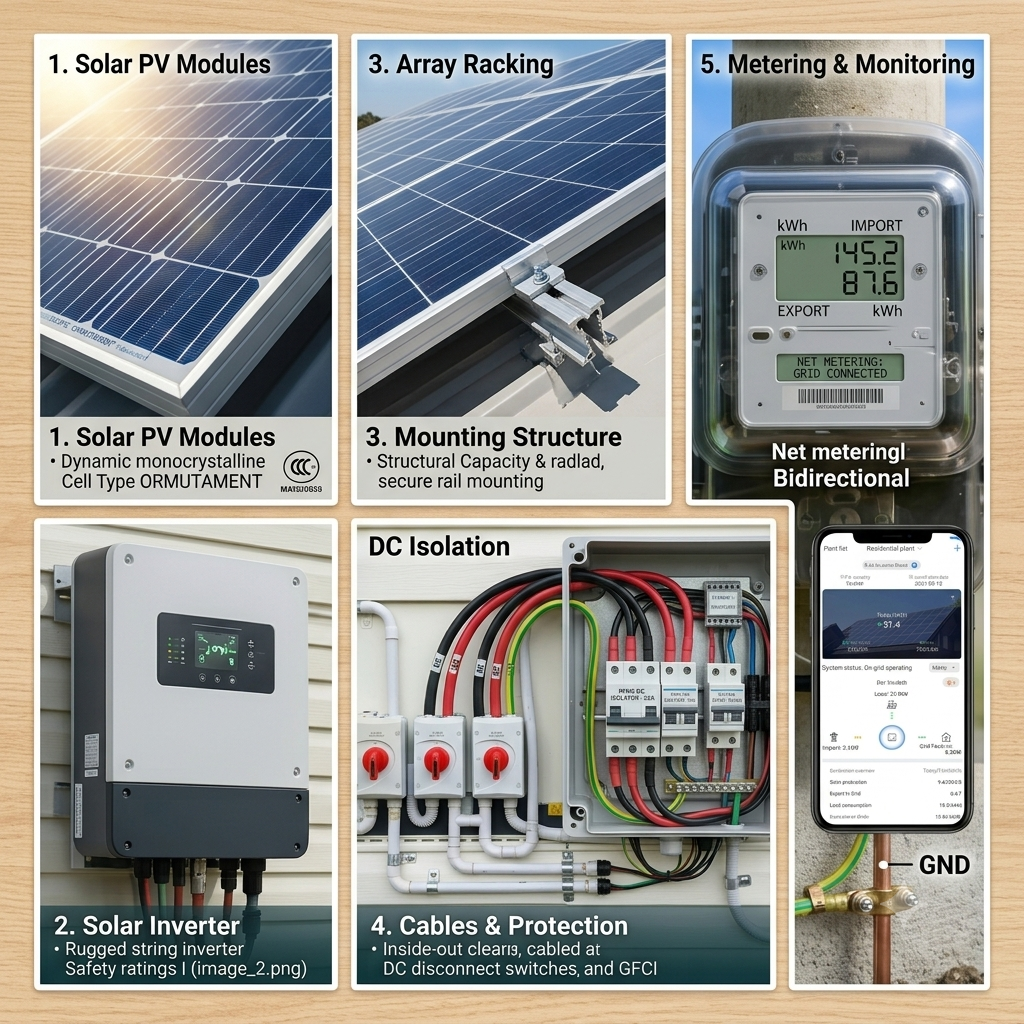
13. Major System Components
The major components used in a residential rooftop solar installation include:
- Solar PV modules: Convert sunlight into DC electricity.
- Solar inverter: Converts DC electricity into AC electricity.
- Mounting structure: Supports the panels securely on the rooftop.
- DC and AC cables: Carry electricity between system components.
- Electrical protection devices: Provide appropriate isolation and circuit protection.
- Surge protection: Helps protect equipment against electrical surges where required.
- Earthing and bonding system: Supports electrical safety.
- Electricity meter: Records grid import and export according to the approved arrangement.
- Monitoring system: Tracks generation and system performance.
14. Key Project Benefits
- Clean Energy Generation: Produces electricity from renewable solar energy.
- Reduced Grid Consumption: Helps reduce the amount of electricity purchased from the grid.
- Efficient Rooftop Utilization: Makes productive use of existing rooftop space.
- Energy Cost Management: Supports long-term household electricity cost savings.
- Environmental Sustainability: Can reduce emissions associated with conventional electricity generation.
- Flexible Capacity: Can be designed according to household electricity requirements and available roof area.
Actual savings depend on system capacity, sunlight, household consumption, electricity tariffs and applicable metering rules.
15. Project Outcome
The completed Residential Rooftop Solar Project demonstrates how photovoltaic technology can generate renewable electricity for residential use. A properly designed, installed and maintained system can support lower grid electricity consumption, improved use of renewable energy and long-term energy cost management.
The actual electricity generation and financial benefits depend on rooftop conditions, sunlight availability, equipment specifications, system capacity, household consumption and applicable utility regulations.